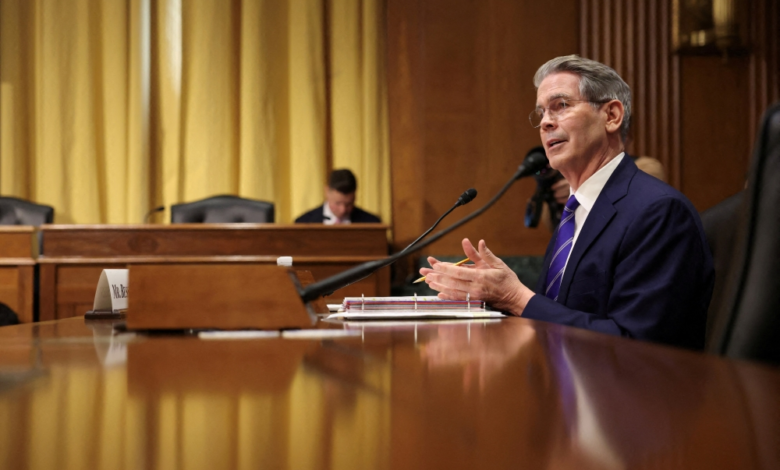

Scott Bisent, whose name has been floated as a potential US Treasury Secretary should Donald Trump win the election, warned that Iran might be forced to take the unprecedented step of shutting down its oil wells within the next week. This warning comes amid immense pressure from US economic sanctions, which have brought Iranian crude oil storage facilities to capacity, posing a significant logistical and operational challenge to the country's energy sector.
The repercussions of sanctions and the “maximum pressure” policy
According to Bisent, Iranian oil storage facilities are rapidly filling up as a result of the economic sanctions that prevent Tehran from freely exporting its oil to global markets. He explained that this critical situation could push the Iranian regime to halt production from its oil wells, a move with severe technical and economic consequences. Bisent added, “Their oil infrastructure is showing signs of deterioration and has not been maintained due to our sanctions imposed on them for decades.”.
Historical background: From the nuclear agreement to the economic embargo
The roots of the current crisis lie in the 2018 decision by former US President Donald Trump's administration to withdraw from the Joint Comprehensive Plan of Action (JCPOA), also known as the Iran nuclear deal, and reimpose crippling economic sanctions as part of a campaign dubbed "maximum pressure." This campaign primarily aimed to cripple Iran's oil sector, the lifeblood of the country's economy and the regime's main source of revenue. Since then, Iran has faced increasing difficulties in selling its oil, even to countries that were once its major customers.
The strategic importance of the Strait of Hormuz and military tensions
These economic pressures coincide with escalating military tensions in the Gulf region, particularly in the Strait of Hormuz, through which approximately one-fifth of the world's oil supply passes. Bisent noted that the US Navy plays a pivotal role in enforcing the blockade and preventing shipping to and from Iran. In this context, the US military announced the commencement of a military operation aimed at "restoring freedom of navigation" for commercial vessels through the strait, adding a military dimension to the existing economic crisis and increasing the likelihood of confrontation in this vital waterway.
Potential impacts on local and global markets
Iran, a major OPEC oil producer, shutting down its oil wells would have profound consequences. Domestically, it would exacerbate the already dire economic crisis facing the Iranian people, with further currency devaluation and soaring inflation. Internationally, the removal of significant Iranian oil from the production equation, even if its impact is currently limited by sanctions, would create uncertainty in global energy markets and could trigger sharp fluctuations in oil prices, impacting energy-consuming economies worldwide.