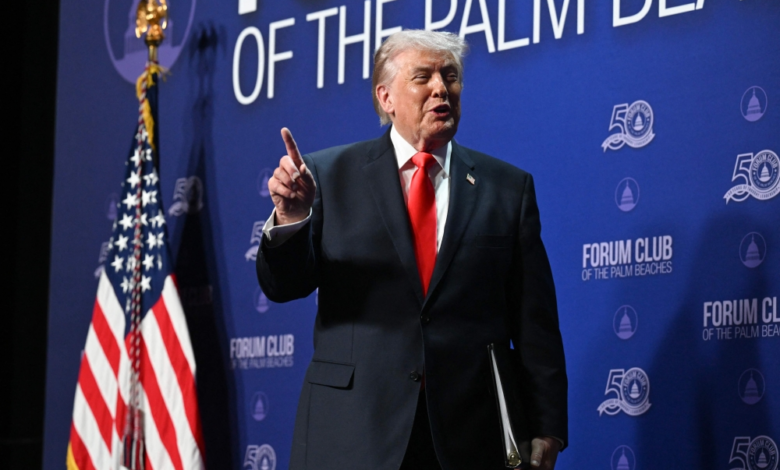
Trump: Iran has not paid the price... and tensions are escalating in the Middle East

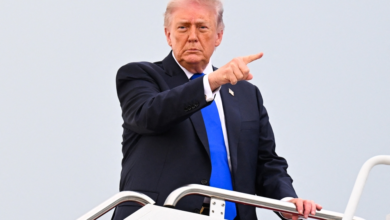
In a striking statement, former US President Donald Trump reiterated his hardline stance toward Iran, asserting that it has yet to pay the appropriate price for what he termed its "crimes against humanity" over the past decades. In a post on his Truth Social platform, Trump indicated that he would review a new Iranian proposal for negotiations, but expressed deep skepticism about accepting it.
Trump wrote: “I will soon review the plan that Iran just sent us, but I cannot imagine it will be acceptable, as they have yet to pay the appropriate price for what they have done to humanity and the world over the past 47 years.” This statement reflects the continuity of Trump’s approach, which has characterized his presidency, based on exerting maximum pressure on Tehran.
The historical context of the “maximum pressure” policy
The roots of the current tension lie in the Trump administration’s decision in May 2018 to unilaterally withdraw from the Iran nuclear deal, formally known as the Joint Comprehensive Plan of Action (JCPOA), which was signed in 2015. The agreement aimed to curb Iran’s nuclear program in exchange for lifting economic sanctions. Trump deemed the agreement “disastrous” and “the worst deal ever negotiated,” arguing that it did not address Iran’s ballistic missile program or its destabilizing activities in the region.
Following the withdrawal, Washington reimposed harsh economic sanctions as part of a campaign it called “maximum pressure.” This campaign aimed to cripple the Iranian economy, reduce its oil exports to zero, and force it back to the negotiating table to reach a new, more comprehensive agreement covering all contentious issues.
Regional and international impacts
The maximum pressure policy led to a dangerous escalation in the Persian Gulf and the wider Middle East. The region witnessed attacks on oil tankers, targeting of Saudi oil facilities, and the downing of a US drone. Tensions peaked in January 2020 with the US assassination of Qassem Soleimani, commander of the Quds Force of the Iranian Revolutionary Guard, in Baghdad. Iran retaliated by launching missile strikes on military bases hosting US forces in Iraq.
Internationally, the US stance strained relations with its European allies (Britain, France, and Germany), who were parties to the nuclear agreement and had worked hard to preserve it. In a related development, Trump announced plans for a significant reduction in the number of US troops stationed in Germany, a move widely interpreted as a message to European allies that they needed to increase their defense spending and assume greater security responsibilities.