
Decisive statements from the White House
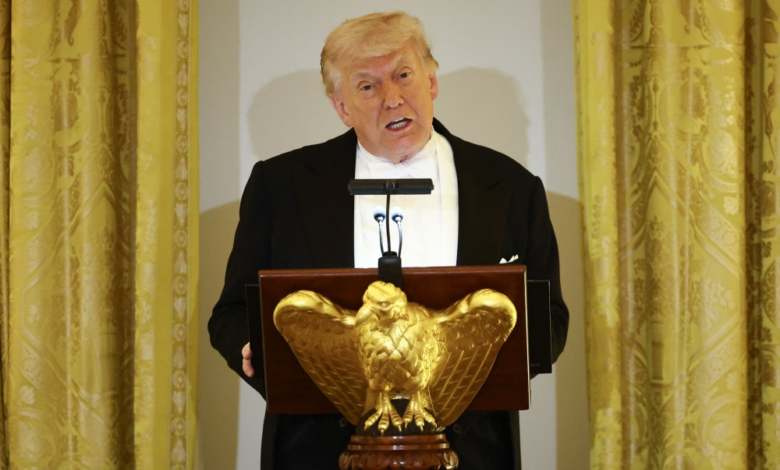
In a statement reflecting his administration's strategy, former US President Donald Trump asserted that the United States would not allow Iran to acquire a nuclear weapon, claiming that his country had "militarily defeated Iran." These remarks, made during a formal dinner at the White House, carried significant political weight, as Trump emphasized that there was complete agreement on this point with Washington's allies.
Background to the tension: Withdrawal from the nuclear agreement
This tension stems from President Trump's decision in May 2018 to withdraw from the Joint Comprehensive Plan of Action (JCPOA), commonly known asthe Iran nuclear deal. This landmark agreement was signed in 2015 between Iran and the P5+1 group of nations: the United States, Britain, France, Russia, China, and Germany. The agreement aimed to significantly restrict Iran's nuclear program in exchange for lifting economic sanctions. However, the Trump administration deemed the agreement "disastrous" and flawed because it failed to address Iran's ballistic missile program or its destabilizing activities in the Middle East.
The “maximum pressure” strategy and its impact
Following its withdrawal from the agreement, Washington adopted a policy of “maximum pressure,” which involved reimposing harsh and comprehensive economic sanctions on Tehran, targeting vital sectors such as oil, banking, and shipping. The stated goal of this campaign was to cripple the Iranian economy and force it back to the negotiating table to reach a new, more comprehensive agreement. These sanctions have already led to a sharp deterioration in the Iranian economy, with the local currency plummeting in value and inflation and unemployment rates soaring, directly impacting the lives of Iranian citizens.
Regional and international importance and influence
The impact of this policy was not limited to Iran alone, but extended to the entire region and the international community. Regionally, tensions in the Persian Gulf escalated, with attacks targeting oil tankers and vital infrastructure, raising fears of a direct military confrontation. Internationally, the US stance led to clear disagreements with European allies who sought to preserve the nuclear agreement, considering it the best way to prevent Iran from developing nuclear weapons. The United States also sought to dismantle what it described as the “shadowy financial networks” used by the Iranian regime to support its proxies in the region and circumvent sanctions, further increasing pressure on global financial institutions that do business with Tehran.