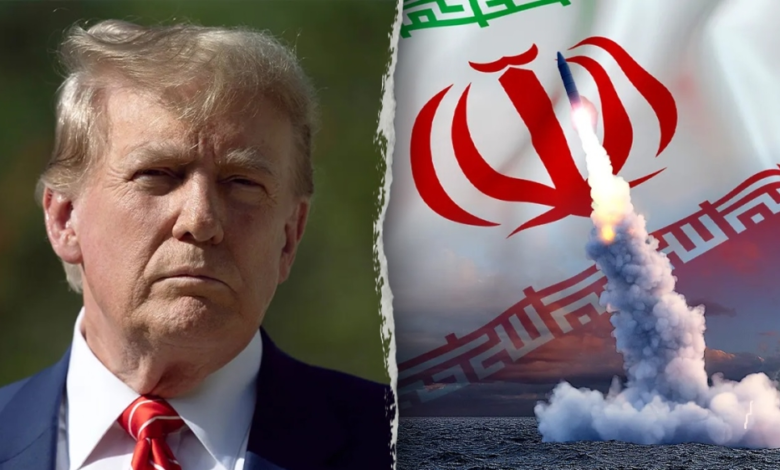

US President Donald Trump escalated his warnings to Tehran, threatening to destroy any Iranian naval fast attack craft if they attempt to break the US naval blockade imposed on Iranian ports. This dangerous escalation comes on the heels of stalled negotiations between the two countries, raising the specter of a new phase of military and political tension that could destabilize the Middle East.
Details of the American threat and military approach
In a strongly worded message posted on his social media platform Truth Social, Trump issued a direct warning: “If any of these vessels come near our blockade, they will be immediately destroyed.” He was clearly referring to the fast attack craft that the Iranian Revolutionary Guard Corps relies on in its asymmetric naval tactics. To underline the seriousness of his threat, Trump explained that US forces would use the same harsh “kill system” they previously employed against drug-smuggling vessels off the coast of Venezuela during its blockade. Despite these fiery threats, Trump claimed that the Iranian leadership still desperately wanted to reach a comprehensive agreement with Washington.
Historical context and strategic importance of the Strait of Hormuz
Historically, the waters of the Arabian Gulf and the Strait of Hormuz have long been a stage for tensions between Washington and Tehran, from the "Tanker War" in the 1980s to the "maximum pressure" strategy adopted by successive US administrations. The current situation is particularly dangerous due to the strategic importance of the Strait of Hormuz, a vital artery for the global economy, through which approximately one-fifth of the world's crude oil and liquefied natural gas production passes. Any disruption to navigation in this narrow waterway would mean an immediate global energy crisis, disruption to supply chains, and an unprecedented surge in fuel prices.
The repercussions of the blockade and maritime traffic
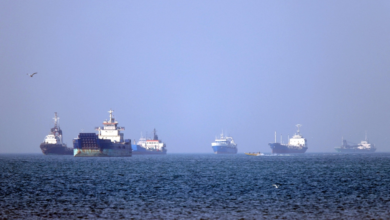
On the ground, the US president noted that 34 commercial vessels had successfully transited the Strait of Hormuz on Sunday, describing it as “the highest number since this crazy blockade” imposed by Iran began. This perplexing situation prompted urgent action from the international community. China, heavily reliant on Iranian and Gulf oil imports to fuel its industrial sector, called for the stability of maritime traffic and the avoidance of any supply disruptions. Turkish Foreign Minister Hakan Fidan, echoing a similar stance from the Association of Southeast Asian Nations (ASEAN), also demanded the immediate reopening of the strait to ensure the safe flow of global trade.
Positions of international organizations and Washington's allies
The maritime dispute has sparked grave international concern, with UN Secretary-General António Guterres calling on all parties to exercise restraint and respect freedom of navigation in the Strait of Hormuz. His spokesperson, Stéphane Dujarric, conveyed a humanitarian warning that “some 20,000 seafarers are caught in this conflict on board vessels facing increasing difficulties every day.” Similarly, the Secretary-General of the International Maritime Organization, Arsenio Domínguez, emphasized that no state has the right to close the Strait of Hormuz to international shipping under international maritime law and custom.
Division in Western positions
Criticism wasn't limited to international organizations and adversaries; it extended to Washington's closest allies in Europe, reflecting deep concerns about potentially disastrous economic consequences. British Prime Minister Keir Starmer stated unequivocally to the BBC: "We do not support the blockade, and we have been clear that we will not be drawn into this war." German Chancellor Friedrich Merz warned that the European economy, and the German economy in particular, would suffer for a long time from the repercussions of a new energy crisis that could be triggered by a wider war in the Middle East. This position was echoed by Spain, which described the escalating measures as "pointless" given the current fragile international climate.