The Minister of Interior inaugurates the Absher 2025 conference and launches digital services

His Royal Highness Prince Abdulaziz bin Saud bin Nayef bin Abdulaziz, Minister of Interior, inaugurated today in Riyadh the “Absher 2025 Conference,” organized by the Ministry of Interior in strategic partnership with the Tuwaiq Academy. This prominent technological event reinforces the Kingdom of Saudi Arabia’s position as one of the world’s leading countries in digital transformation and smart government services.
Digital leadership in line with the Kingdom's Vision 2030
The Absher 2025 conference comes at a time when the Kingdom is witnessing significant leaps in the technology and artificial intelligence sectors, in line with the goals of Vision 2030, which prioritizes digital transformation. The Absher platform is a prime example of this transformation, having evolved from an e-services platform into a comprehensive smart system serving millions of citizens, residents, and visitors, contributing to improved quality of life and a better business environment.
In his speech during the ceremony, His Highness Prince Bandar bin Abdullah bin Mishari, Assistant Minister of Interior for Technology Affairs, emphasized the pivotal role played by the Ministry in adopting the latest technologies to serve pilgrims, tourists and the local community, noting that the continuous development of the Absher platform reflects the Ministry’s commitment to providing a smooth and secure user experience.
Launching a new generation of AI-based services
The conference witnessed the announcement by Thamer bin Mohammed Al-Harbi, Deputy Assistant Minister of Interior for Technology Affairs, of a package of high-quality digital launches that rely primarily on artificial intelligence, including:
- Absher Assistant: An interactive service that allows users to complete their transactions through commands based on proxy artificial intelligence.
- Comprehensive Field: A unified field security system aimed at raising the efficiency of security work and enhancing public safety.
- Security Chats: An encrypted and secure communication channel dedicated to ministry staff to ensure confidentiality and speed of information exchange.
- Talk to your data: A smart interface that supports decision-makers through direct interaction with operational data.
- Central Reporting Database: A unified system for analyzing 911 emergency reports using artificial intelligence technologies for rapid response.
Global partnerships and entry into the Guinness World Records
In a move to enhance the Ministry's technological capabilities, His Royal Highness the Minister of Interior oversaw the signing of a strategic agreement with Humanine, a global company specializing in artificial intelligence. The ceremony also witnessed a historic announcement from representatives of Guinness World Records, as the Ministry of Interior broke world records through the "Absher Tuwaiq Hackathon," setting three new records:
- The world's largest hackathon in terms of the number of participants (more than 4,100 participants).
- The world's largest security innovation hackathon.
- The world's largest digital solutions hackathon.
Honoring innovators and success partners
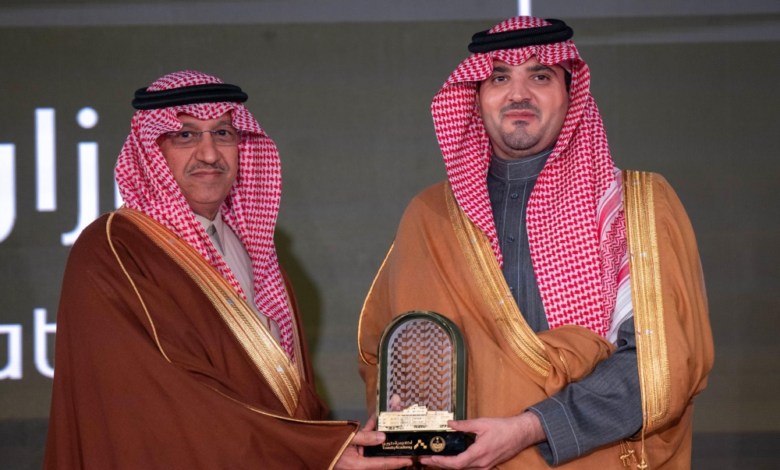
The ceremony concluded with His Royal Highness the Minister of Interior honoring the strategic partners, most notably the Ministry of Education, the Saudi Data and Artificial Intelligence Authority (SDAIA), and the Digital Government Authority. The winning teams in the hackathon were also recognized, with Team “Al-Zil” taking first place and a prize of a quarter of a million riyals, followed by Team “Ikhlaa” and Team “Tanbih.” In addition, special prizes and support were awarded to entrepreneurs through the incubator program at the “Al-Karaj” technology center, underscoring the Ministry’s commitment to supporting young national talent and transforming their ideas into successful entrepreneurial projects.