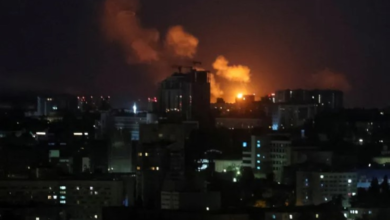

Iranian authorities officially announced on Sunday that vital energy sites in and around the capital Tehran were subjected to intense airstrikes, accusing the United States and Israel of being behind the attack that targeted the country's oil infrastructure.
Details of the attack and reported damage
In detailing the incident, the managing director of the National Iranian Oil Products Distribution Company, Karamat Veis Karami, told Iranian state television that aircraft he described as "enemy aircraft" launched attacks late at night. The Iranian official explained that the bombing targeted four strategic oil storage facilities, as well as a vital logistics site used for transporting petroleum products. These facilities are located in the center of the capital, Tehran, and the neighboring Alborz province.
Karami confirmed that the five targeted facilities suffered varying degrees of material damage, noting at the same time that the fire and civil defense teams were able to control the fires resulting from the bombing, thus preventing a wider environmental or human disaster.
The context of regional tension and covert war
This dangerous military development comes amid an unprecedented escalation of tensions in the Middle East, where a so-called "shadow war" has been raging between Tehran and Tel Aviv for years. These confrontations are typically characterized by tit-for-tat cyberattacks, targeting of commercial vessels, and attacks on sensitive facilities. However, the announcement of a direct, joint (American-Israeli) airstrike deep inside Tehran represents a qualitative shift in the existing rules of engagement.
Observers believe that targeting energy infrastructure carries strong political and military messages, especially in light of ongoing disputes over Iran’s nuclear program and Tehran’s regional influence in the region.
The economic importance and repercussions of targeting oil
These attacks are particularly significant given that the oil sector is the lifeblood of the Iranian economy. Targeting distribution depots and logistics hubs aims not only to inflict material damage but also to disrupt domestic supply chains and undermine economic stability. Such incidents raise concerns in global energy markets, as military tensions in the Gulf and surrounding areas often lead to fluctuations in global oil prices due to fears of disruptions to shipping lanes or supply chains.
The region is holding its breath in anticipation of possible reactions, amid ongoing international calls for restraint and to avoid the region sliding into a full-scale military confrontation that could have disastrous consequences for international peace and security.