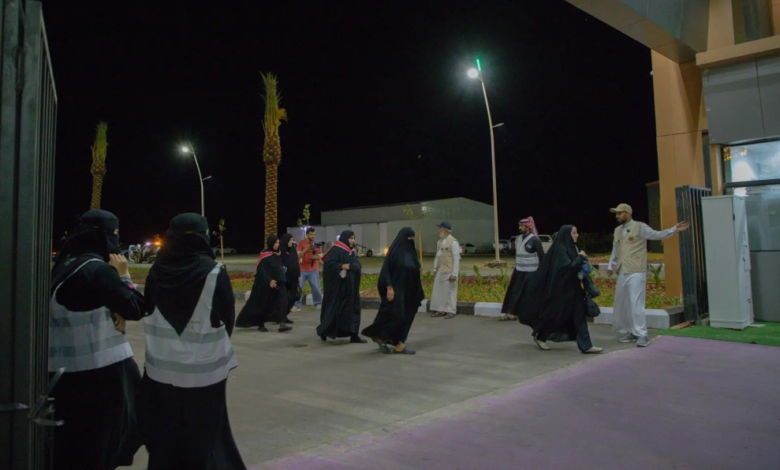
The Hajj City in Al-Shaqiq begins receiving pilgrims for the year 1445 AH through the northern entry points

The overland Hajj season begins via the northern border crossings
With the approach of the Hajj season for 1445 AH, the Hajj and Umrah City in Al-Shaqiq Center, Al-Jawf region, announced the commencement of receiving the first groups of pilgrims arriving by land to the Kingdom of Saudi Arabia. This city serves as a vital entry point for pilgrims coming from neighboring countries via the Al-Haditha border crossing in Al-Qurayyat Governorate and the Jadidah Arar border crossing in the Northern Borders region. Efforts are being integrated to provide a comprehensive range of advanced services aimed at facilitating their spiritual journey and ensuring their comfort from the moment of their arrival.
Historical background and the Kingdom's efforts in serving pilgrims
Since its founding, the Kingdom of Saudi Arabia has placed paramount importance on serving the Two Holy Mosques and their visitors. The "Hajj Cities," located at major land border crossings, are an integral part of a comprehensive system designed to serve the pilgrims. These cities are not merely transit points, but rather exemplary reception centers that reflect the Kingdom's renowned hospitality and its leadership's commitment to providing the utmost comfort for pilgrims. The development and equipping of these cities aligns with the objectives of the Kingdom's Vision 2030, which aims to enrich the religious and cultural experience of Hajj and Umrah pilgrims and enhance the quality of services provided to them.
Complete facilities in the city of Hajjaj Al-Shaqiq
The Hajj City in Al-Shaqiq spans a vast area exceeding 113,000 square meters and has been designed as a comprehensive oasis of comfort. The city includes 13 fully equipped accommodation rooms, three spacious reception halls, and an information center aimed at educating pilgrims about Hajj rituals and providing them with necessary guidance. To ensure healthcare, more than 100 fully equipped medical facilities have been provided. The site also features a large central kitchen with a capacity of up to 5,000 meals per hour and seven vehicles dedicated to transportation within the city, ensuring smooth movement and easy access to all facilities.
The importance of government strategy and integration
The reception of pilgrims in the Al-Jawf region is directly overseen by His Royal Highness Prince Faisal bin Nawaf bin Abdulaziz, Governor of Al-Jawf and Chairman of the region's Supreme Hajj Committee, reflecting the strategic importance of the site. The Al-Jawf Pilgrims and Umrah Services Association operates and manages the site under the supervision of the region's governorate, in cooperation and integration with a network of partner government agencies, most notably the Ministry of Hajj and Umrah, the Ministry of Transport and Logistics, the Al-Jawf Health Cluster, all security sectors, and the branch of the Ministry of Islamic Affairs. This collaboration ensures the provision of a seamless and comprehensive service encompassing administrative, health, security, and logistical aspects, highlighting the Kingdom's unique model for crowd management and organizing the Hajj pilgrimage.
Regional and international impact
The city welcomes pilgrims from several countries, including Iraq, Syria, Jordan, and Palestine, making it a gateway of peace and goodwill that reflects the Kingdom's pivotal role in serving the Muslim world. The successful management of these entry points and the provision of high-quality services not only facilitate the pilgrims' journey but also enhance the Kingdom's positive image on the international stage, reaffirming its unwavering commitment to providing a safe and accessible Hajj experience for millions of Muslims from around the globe.