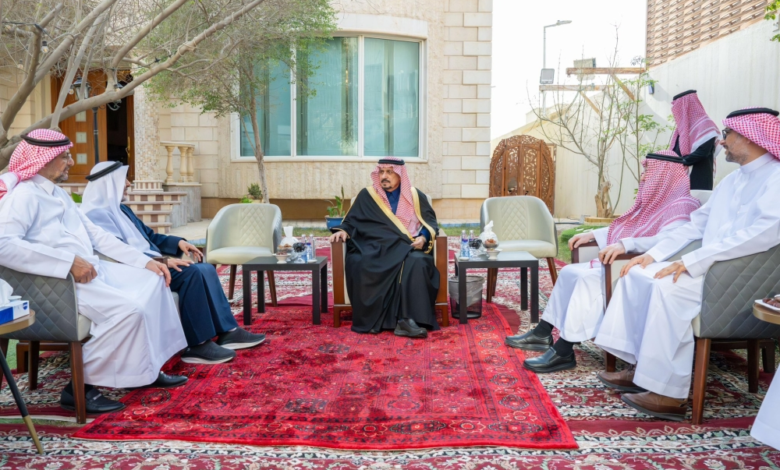
The Governor of Riyadh offers his condolences to the Al-Suwailem family on the death of Abdulrahman bin Abdulaziz

His Royal Highness Prince Faisal bin Bandar bin Abdulaziz, Governor of Riyadh Region, paid a condolence visit to the Al-Suwailem family in Riyadh, where His Highness offered his sincere condolences on the death of the late Abdulrahman bin Abdulaziz Al-Suwailem, may God have mercy on him.
During his visit to the mourning site, His Royal Highness the Prince of Riyadh expressed his deepest condolences to the bereaved family, praying to God Almighty to grant the deceased His abundant mercy, admit him to Paradise, and grant his family patience and solace in their profound loss. He was received by a number of prominent members of the Al-Suwailem family, who expressed their appreciation for this kind gesture.
The unity of the leadership and the citizens
This visit comes within the framework of the steadfast approach adopted by the wise leadership of the Kingdom of Saudi Arabia, which is characterized by continuous communication with citizens on various occasions. Prince Faisal bin Bandar's visit embodies the deep cohesion and bond between the rulers and the people of the community, as His Highness is always keen to share in the joys and sorrows of the residents of the Riyadh region, reflecting a bright image of the paternal and fraternal relationship that connects officials with citizens.
Social impact of the visit
These field visits by regional governors have a profound impact on citizens, easing their grief and bringing solace to bereaved families. The governor's presence at a condolence gathering is not merely an official duty, but a social and humanitarian gesture affirming that the loss is shared, and that Saudi society is like one body; if one part suffers, the whole body responds with sleeplessness and fever. These are authentic Islamic and Arab values deeply rooted in the Kingdom's culture.
The family of the deceased appreciates
For their part, the Al-Suwailem family expressed their sincere gratitude and appreciation to His Royal Highness the Prince of Riyadh for his condolences and sympathy, affirming that this visit had a profound impact in alleviating their grief. They noted that His Highness's concern and participation with them during this difficult time reflects the keenness of the rulers – may God protect them – to check on the well-being of citizens and stand by them, praying that God reward His Highness abundantly and protect the Kingdom and its leadership from all harm.