Aramco shares lead the Saudi stock market to rise above 11,000 points

Aramco stock leads financial market gains
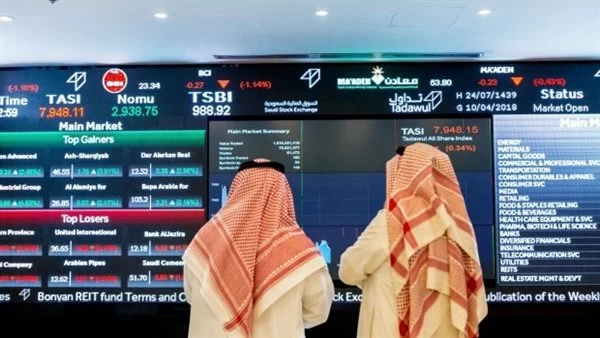
The Saudi stock market (Tadawul) recorded a notable positive performance at the start of trading today, with Aramco shares the strong gains. Shares of the global oil giant rose by 0.59% to reach SAR 27.16. This strong performance by Aramco was the main driver behind the rise of the Tadawul All Share Index (TASI) by 0.44%, closing at 11,139 points, amidst a prevailing sense of optimism across most listed stocks.
A sense of optimism and a widening scope of gains
Aramco shares topped the list of most actively traded stocks by value, registering a turnover of approximately 117 million riyals. The session saw a broad rally across 186 stocks, while only 64 declined. This wide range of gains reflects investor confidence, primarily driven by the recovery of the energy sector and related petrochemical and industrial sectors. In addition to Aramco, other companies that achieved notable gains included Alujain Corporation, National Gas and Industrialization Company, and Saudi Cable Company, further highlighting the overall positive sentiment in the market.
Historical context and importance of the financial market
Historically, Aramco's stock has been the primary driver of the Saudi stock market index due to its substantial weighting and market capitalization, which has been among the largest globally since its historic listing in late 2019. The company plays a pivotal role in supporting the Saudi economy, with its market movements often reflecting the overall trends of the local economy and its sensitivity to global energy markets. This performance aligns with the objectives of Saudi Vision 2030, which aims to strengthen the financial market and attract more domestic and foreign investment.
Oil developments and geopolitical tensions
On the geopolitical and economic front, this rise is supported by strategic developments in the oil market. International reports, including those from Bloomberg, indicate that the Saudi East-West (Petroline) pipeline system is currently operating at full capacity, with a capacity of nearly 7 million barrels per day. This strategic pipeline dates back to the 1980s, during the Iran-Iraq War, and was specifically designed to provide a safer and alternative route for Saudi oil exports, bypassing the Strait of Hormuz.
The local and international impact of the energy strategy
This strategic move is of paramount importance at present, given the escalating geopolitical tensions that have led to a virtual closure of the Strait of Hormuz. Saudi Arabia swiftly activated its contingency plans and rerouted its oil exports through the Red Sea, ensuring the continued flow of energy supplies to global markets. This action not only benefits the domestic economy and the Saudi stock market but also has regional and international repercussions. Internationally, these measures help reassure global markets and curb sharp fluctuations in oil prices, reinforcing the Kingdom's role as a reliable guarantor of global economic and energy security.