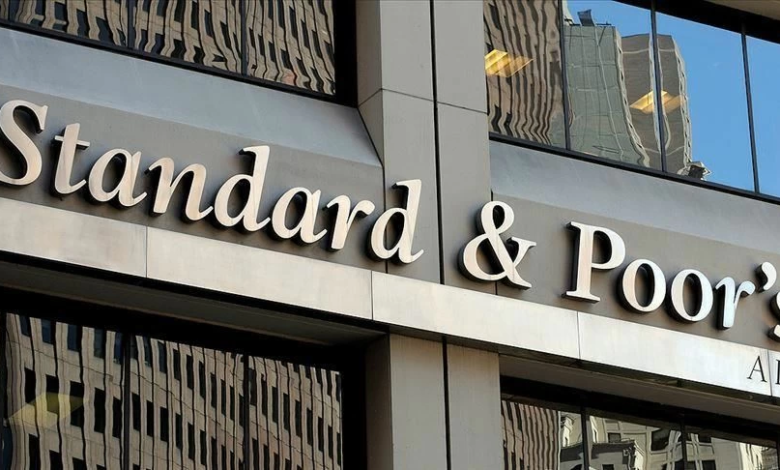

Belgium's credit rating downgraded amid growing financial concerns
In a move reflecting growing concern about the financial situation in the heart of Europe, Standard & Poor's Global Ratings downgraded Belgium's sovereign credit rating from AA to AA-. This decision, the second of its kind in a week, comes with a stable outlook but underscores the significant challenges facing the country's public finances.
The agency explained in its report that the main reason behind this downgrade is concern about the persistent budget deficit. Standard & Poor's expects Belgium's public debt to rise to approximately 109% of GDP by 2027, accompanied by a significant increase in debt servicing costs due to rising global interest rates.
Economic context and structural challenges
This reduction did not come out of nowhere. Belgium has historically suffered from high levels of public debt compared to the Eurozone average. This problem has been exacerbated by successive crises that have hit the global economy, starting with the COVID-19 pandemic, which necessitated massive government spending to support individuals and businesses, and continuing with the energy crisis that followed the war in Ukraine, which increased pressure on government budgets across Europe.
In a related development, Belgium was not alone in facing scrutiny from rating agencies. Standard & Poor's also revised its outlook for Finland to "negative," while maintaining its rating at AA+. The agency attributed this change to slowing economic growth, increased defense spending amid geopolitical tensions, and demographic pressures stemming from an aging population and rising interest costs on debt.
Expected impacts at the local and European levels
Domestically, the credit rating downgrade means the Belgian government could face higher borrowing costs in the future, as investors demand a higher risk premium to lend to a lower-rated country. This could put additional pressure on the public budget and may force the next government to adopt austerity measures or structural reforms to stabilize public finances.
At the regional level, the deterioration in the creditworthiness of a key Eurozone country like Belgium, which hosts the headquarters of the European Union and NATO, sends a worrying signal about the stability of public finances in the region as a whole. It also highlights the challenges member states face in adhering to EU fiscal rules in a turbulent global economic environment.
Geopolitical tensions and energy security: looming risks
Rating agencies warn that persistently high energy prices and geopolitical tensions, including the war in Ukraine and the conflict in the Middle East, could derail Europe's fragile economic recovery. These risks are prompting the European Union to reassess its energy strategies.
In this context, the European Commission, for the first time in a decade, called on EU member states to accelerate the transition to clean energy, focusing on both "green" energy sources and nuclear power. European Commission President Ursula von der Leyen stated at a press conference in Brussels: "We are paying a heavy price for our excessive reliance on hydrocarbon fuels," emphasizing the need to strengthen European energy security and reduce dependence on unstable external sources.