Jeddah Walks Initiative 2: 37,000 beneficiaries participate to promote public health

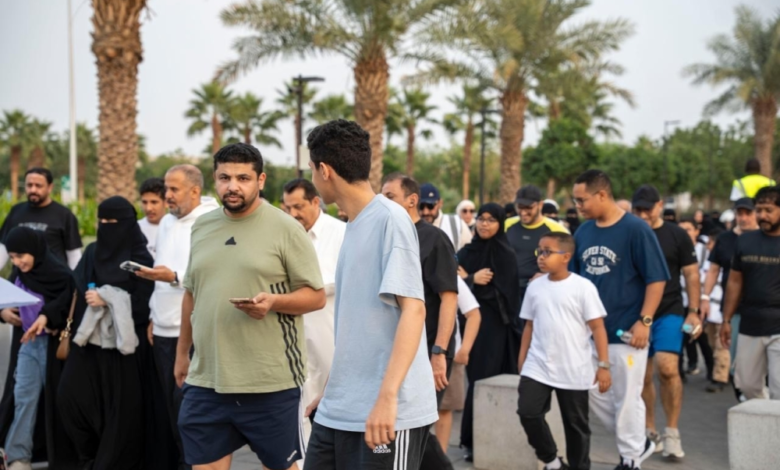
The “Jeddah Walks 2” initiative, launched by the Jeddah Municipality, has achieved remarkable success and widespread community engagement, with over 37,000 participants. This initiative aligns with the municipality’s strategy to promote public health and cultivate a culture of walking across all segments of society. It is also a key component of the Quality of Life Program, one of the most important programs under the Kingdom’s Vision 2030, which aims to transform Saudi cities into healthy environments that encourage physical activity.
Participation figures and statistics
In detailing the official statistics for the initiative, Engineer Hattan bin Hashem Hamouda, Director General of Social Responsibility at the Jeddah Municipality, explained that the total number of participants reached 37,556. The initiative relied on modern technology to motivate participants through the “Walking Challenge” application, with engagement divided into two main tracks: the first, the “60-Minute Challenge,” attracted the largest number of participants at 29,792, while 7,764 people participated in the “Points Collection Challenge.” This turnout reflects the growing awareness among Jeddah residents of the importance of daily exercise.
General context and humanizing cities
The “Jeddah Walks 2” initiative cannot be viewed as an isolated event, but rather as part of a strategic transformation underway in Saudi Arabia towards “humanizing cities.” Since the launch of Vision 2030, relevant authorities, including the Jeddah Municipality, have been working to reshape the urban landscape to be more pedestrian-friendly than car-friendly. This is evident in the development of 25 pedestrian walkways, both main and secondary, distributed throughout the city's various districts, to serve as the venue for this initiative. These walkways have facilitated residents' access to safe and well-equipped spaces for exercise, representing a supportive infrastructure for a sustainable healthy lifestyle.
Expected health and social impact
These initiatives are of paramount importance both locally and regionally, given the health challenges facing modern societies linked to sedentary lifestyles, such as obesity, diabetes, and heart disease. Encouraging over 37,000 people to walk not only improves their immediate physical fitness but also establishes a long-term preventative culture that will alleviate the burden on the healthcare sector in the future. Socially, these events transform walkways and public parks from mere quiet green spaces into vibrant centers of social interaction, strengthening bonds between neighborhood residents and creating a positive and active community environment.
In conclusion, the Jeddah Municipality affirms that “Jeddah Walks 2” is a link in a chain of ongoing quality initiatives aimed at investing in and activating municipal facilities to be vital elements in improving the mental and physical health of the population, and moving forward towards a vibrant society that adopts sports as a daily lifestyle.