
أهمية الإجراءات الوقائية في حماية المحاصيل الزراعية
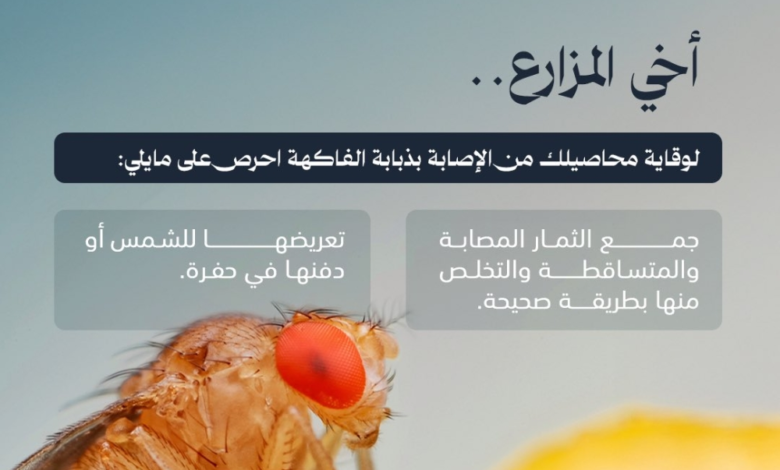
أكد المركز الوطني للوقاية من الآفات النباتية والأمراض الحيوانية ومكافحتها “وقاء”، على أن التخلص السليم من الثمار المصابة والمتساقطة يعد أحد أهم الإجراءات الوقائية الأساسية للحد من انتشار آفة ذبابة الفاكهة. ويأتي هذا التأكيد في إطار جهود المركز المستمرة لحماية البساتين والمحاصيل الزراعية في المملكة من الأضرار الاقتصادية والزراعية الجسيمة التي تسببها هذه الآفة، والتي تعتبر من أخطر الآفات التي تهدد الإنتاج الزراعي على مستوى العالم.
السياق العام: فهم خطورة ذبابة الفاكهة
تُعد ذبابة الفاكهة، بأنواعها المختلفة مثل ذبابة فاكهة البحر الأبيض المتوسط، من الآفات الحجرية المدمرة التي تهاجم مجموعة واسعة من محاصيل الفاكهة والخضروات. تتمثل خطورتها في دورة حياتها، حيث تضع الأنثى بيضها داخل الثمار السليمة. بعد الفقس، تتغذى اليرقات (الديدان) على لب الثمرة، مما يؤدي إلى تعفنها وتلفها بالكامل وسقوطها على الأرض. بعد اكتمال نموها، تخرج اليرقات من الثمرة لتتحول إلى عذارى في التربة، ثم تخرج حشرات كاملة لتعيد دورة الإصابة من جديد. هذا السلوك يجعل من الثمار المتساقطة والمصابة بؤراً رئيسية لتكاثر الآفة وانتشارها في المزرعة والمناطق المجاورة.
الطريقة الصحيحة للتخلص من الثمار المصابة
أوضح مركز “وقاء” أن الطريقة المعتمدة للتخلص من هذه الآفة تتطلب إجراءات دقيقة لضمان فعاليتها. يجب على المزارعين جمع الثمار المصابة والمتساقطة بشكل دوري ومستمر، ووضعها داخل أكياس بلاستيكية محكمة الإغلاق. بعد ذلك، يتم تعريض هذه الأكياس لأشعة الشمس المباشرة لعدة أيام، وهي عملية تُعرف بـ “التشميس”، والتي تهدف إلى قتل اليرقات والعذارى داخل الثمار بفعل الحرارة المرتفعة. وأخيراً، يتم التخلص من هذه الأكياس عبر دفنها في حفر عميقة، مما يضمن القضاء التام على جميع أطوار الآفة ويمنع عودتها. إن تطبيق هذه الممارسة يكسر دورة حياة الحشرة، ويقلل من أعدادها بشكل كبير دون الحاجة المفرطة للمبيدات.
الأهمية الاقتصادية والبيئية للمكافحة المتكاملة
تندرج هذه الممارسات ضمن برامج الإدارة المتكاملة للآفات (IPM)، التي تعتمد على حلول وقائية وزراعية سليمة لتقليل الاعتماد على المبيدات الكيميائية. إن هذا التوجه لا يحمي المحاصيل فقط، بل يحافظ أيضاً على التوازن البيئي، ويحمي الحشرات النافعة كالنحل والملقحات الأخرى، ويضمن سلامة المنتجات الزراعية وخلوها من متبقيات المبيدات الضارة. على الصعيد الاقتصادي، يؤدي التحكم في ذبابة الفاكهة إلى زيادة جودة الإنتاج الزراعي وقيمته التسويقية، ويفتح الأبواب أمام الصادرات الزراعية السعودية، حيث أن وجود هذه الآفة يعتبر عائقاً رئيسياً أمام التجارة الدولية للمنتجات الزراعية.
دعوة للمزارعين والالتزام بالإرشادات
ودعا المركز المزارعين وأصحاب البساتين إلى ضرورة المتابعة الدورية لمزارعهم، وتطبيق الإجراءات الوقائية بشكل فوري عند ملاحظة أي إصابات. وشدد على أن التزام المزارعين بالتوصيات الفنية والإرشادات الزراعية المعتمدة يساهم بشكل مباشر في رفع كفاءة المكافحة، وتقليل معدلات الإصابة، والحفاظ على الثروة النباتية الوطنية، ودعم مستهدفات الأمن الغذائي واستدامة القطاع الزراعي في المملكة، تماشياً مع رؤية 2030.