
تطوير مستمر لخدمة ضيوف الرحمن
تواصل الهيئة العامة للعناية بشؤون المسجد الحرام والمسجد النبوي جهودها الحثيثة لتعزيز منظوماتها التشغيلية والتقنية، عبر تسخير أحدث الحلول العالمية المبتكرة. تهدف هذه الجهود إلى توفير بيئة مريحة وآمنة لضيوف الرحمن داخل الحرمين الشريفين وساحاتهما، بما يواكب الكثافة البشرية العالية لموسم حج هذا العام 1447هـ، ويرتقي بجودة التجربة التعبدية للحجاج والمعتمرين.
السياق التاريخي لعناية المملكة بالحرمين الشريفين
تأتي هذه التطورات التقنية امتداداً تاريخياً لجهود المملكة العربية السعودية في العناية بالحرمين الشريفين منذ تأسيسها. فعلى مر العقود، شهد المسجد الحرام والمسجد النبوي توسعات تاريخية متعاقبة استهدفت استيعاب الأعداد المتزايدة من المسلمين الوافدين من كافة أنحاء العالم. وقد تطورت البنية التحتية بشكل جذري، منتقلة من الأساليب التقليدية في التهوية والإضاءة إلى تبني أحدث التقنيات الهندسية العالمية، مما يعكس التزام القيادة الرشيدة بتوفير أقصى درجات الراحة والسلامة، وهو ما يتوج اليوم بمستهدفات رؤية السعودية 2030 الرامية إلى إثراء تجربة ضيوف الرحمن وتقديم خدمات استثنائية لهم.
أكبر منظومات تبريد في العالم
يشهد المسجد الحرام تشغيل واحدة من أضخم منظومات التبريد على مستوى العالم، بطاقة إجمالية تصل إلى 155 ألف طن تبريد. تتوزع هذه الطاقة الضخمة بين محطتي “الشامية” التي تنتج 120 ألف طن، و”أجياد” بـ 35 ألف طن. وتعتمد هذه المنظومة المتطورة على تبريد المياه إلى درجات حرارة تتراوح بين 4 و5 درجات مئوية، قبل ضخها عبر شبكة متكاملة إلى وحدات مناولة الهواء بالغرف الميكانيكية. هناك تتم عملية التبادل الحراري ليدفع الهواء النقي والمبرد إلى جميع أرجاء المسجد الحرام. ولضمان الكفاءة، تم تجديد وتطوير وحدات مناولة الهواء واستبدال المبادلات الحرارية، مع تغيير فلاتر تنقية الهواء دورياً للحفاظ على درجات حرارة مستقرة بين 22 و24 درجة مئوية.
تُدار هذه العملية المعقدة عبر 77 حساساً حرارياً موزعة بدقة عالية، تستجيب فورياً للتغيرات في الكثافة البشرية، خاصة خلال أوقات الذروة. كما تدعم المنظومة أنظمة تنقية هواء متقدمة بكفاءة تصل إلى 95%، مدعومة ببرامج صيانة وقائية مستمرة لضمان الاستدامة التشغيلية.
أما في المسجد النبوي الشريف، فتعمل محطة تبريد مركزية تعد من الأكبر عالمياً، وتقع على بُعد 7 كيلومترات غرب المسجد. تضم المحطة 6 وحدات تبريد بطاقة 3400 طن لكل وحدة، إلى جانب 7 مضخات رئيسية لضخ المياه المبردة عبر شبكة أنابيب معزولة. تغطي هذه المنظومة 2357 عموداً و550 وحدة تكييف، مما يضمن توزيعاً متوازناً وفعالاً للهواء المبرد، مع رفع الطاقة التشغيلية خلال موسمي رمضان والحج.
الأثر المحلي والدولي لإدارة الحشود
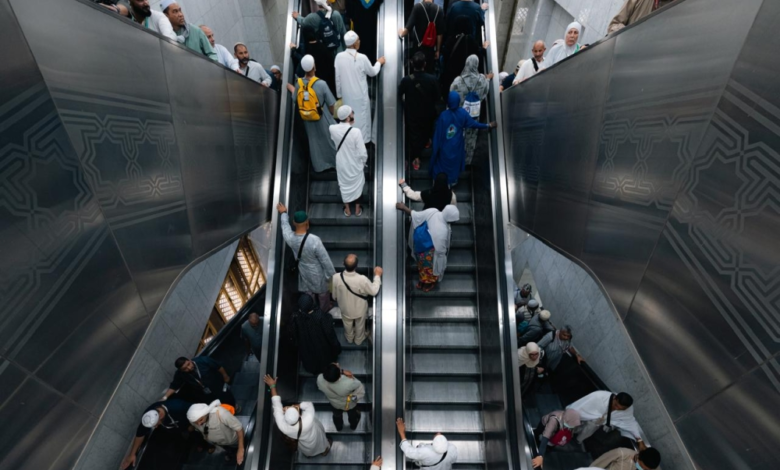
تبرز أهمية هذا التطور التقني على المستويات المحلية والإقليمية والدولية؛ فمحلياً، تضمن هذه الأنظمة انسيابية حركة الملايين بأمان تام. ودولياً، تقدم المملكة نموذجاً هندسياً وإدارياً فريداً في إدارة الحشود الضخمة. وفي جانب تسهيل التنقل، يعتمد المسجد الحرام على منظومة متطورة تضم 224 سلماً كهربائياً و22 مصعداً، قادرة على خدمة أكثر من 200 ألف حاج في الساعة. كما يوفر المسجد النبوي 180 سلماً كهربائياً و25 مصعداً تخضع جميعها لبرامج تشغيل وصيانة دقيقة وفق أعلى معايير السلامة.
إضاءة ذكية واستدامة متقدمة
شهدت أنظمة الإضاءة في الحرمين الشريفين تطوراً نوعياً، حيث يضم المسجد الحرام أكثر من 120 ألف وحدة إضاءة و6900 ثريا، بينما يحتوي المسجد النبوي على أكثر من 137 ألف وحدة LED موحدة اللون. تُدار هذه المنظومات عبر نظام إدارة المباني (BMS) الذي يتيح التحكم الذكي في شدة الإضاءة وفق أوقات الصلاة والكثافة.
وتعتمد الهيئة على غرف قيادة وتحكم مركزية لمراقبة الأنظمة كافة لحظياً، بما يشمل درجات الحرارة والتغذية الكهربائية. كما تُستخدم تقنيات تحليل البيانات للتنبؤ بالأعطال قبل حدوثها، مما يعزز كفاءة التشغيل ويحد من استهلاك الطاقة والمياه ضمن توجهات الاستدامة البيئية، محققاً بذلك الراحة والأمان طوال موسم الحج.