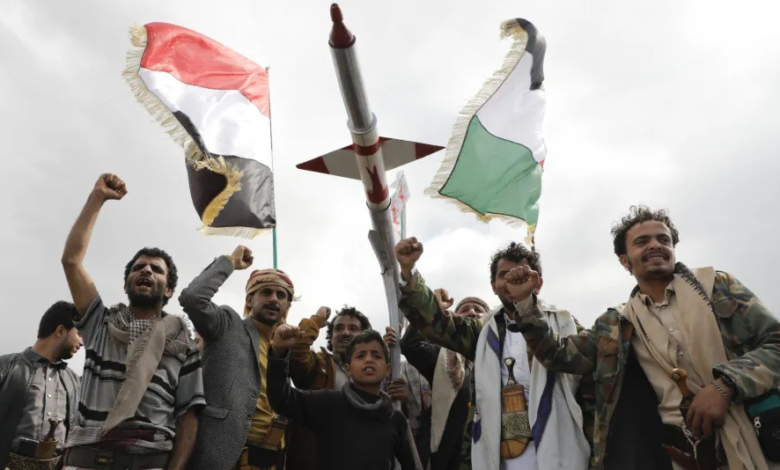

Amid escalating geopolitical tensions in the Middle East, the Houthi (Ansar Allah) issue stands out as one of the most complex. Current events suggest that international sanctions imposed thus far appear insufficient to achieve their strategic objectives. The reality on the ground confirms that the Houthis are not only withstanding economic and political pressure, but are also reshaping the threat landscape, extending beyond Yemen's borders to encompass international shipping lanes and regional security as a whole.
Historical context and development of military capabilities
To understand the nature of this renewed threat, it is essential to return to the roots of the conflict. Since the group seized control of the capital, Sana'a, in September 2014, the conflict has transformed from a local power struggle into a regional proxy war. Over the years, the group has developed a sophisticated military arsenal, moving from reliance on conventional light and medium weapons to possessing long-range drones, ballistic missiles, and naval missiles. This rapid military development raises serious questions about the effectiveness of the arms embargo and how military technology continues to flow into Yemen despite strict international monitoring.
Red Sea Crisis: A New Dimension of the Conflict
Perhaps the most dangerous shift in the Houthis' strategy is their move to the Red Sea and the Bab al-Mandab Strait. The issue is no longer limited to targeting the Yemeni interior or the border regions with Saudi Arabia; it now threatens a vital artery of the global economy. Repeated attacks on commercial vessels have demonstrated the group's ability to disrupt global supply chains, forcing major shipping companies to reroute their vessels around the Cape of Good Hope. This translates to additional costs and delays in the arrival of goods, further exacerbating the already precarious global economy.
The shortcomings of sanctions and the need for a comprehensive strategy
Political and economic analyses indicate that sanctions, whether American or international, often clash with the reality of the parallel economy established by the group, as well as the external support networks that provide it with a continuous lifeline. Traditional economic sanctions may affect the Yemeni people and exacerbate the humanitarian crisis, but they have thus far failed to curb the Houthis' military development or change their political behavior.
Expected regional and international impacts
The continuation of this situation is reshaping security alliances in the region. Internationally, this threat has prompted the United States, Britain, and other European countries to bolster their military presence in the Red Sea, foreshadowing the militarization of waterways. Regionally, neighboring countries find themselves facing a difficult dilemma: balancing diplomatic solutions to end the war in Yemen with the necessity of military deterrence to protect their national security. In short, relying solely on sanctions as a deterrent has proven ineffective, necessitating a comprehensive reassessment by the international community of its strategies for dealing with the Yemeni crisis to ensure regional stability and safeguard global trade.