Jeddah Astronomy Society: The last quarter of Shawwal coincides with the flyby of Artemis 2 around the moon in an exceptional scientific event

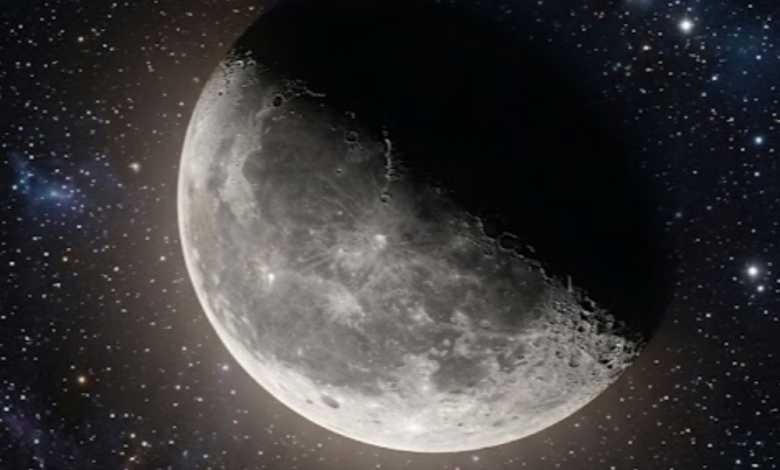
explained the Jeddah Astronomical Society Engineer Majid Abu Zahrathat the moon will be observed in the last quarter phase of the month of Shawwal after midnight on Thursday, April 9, 2026, where half of it will appear almost illuminated while the other half will be submerged in shadow, in an astronomical phase that represents the completion of three-quarters of its orbit around the Earth during the lunar month.
He pointed out that this timing coincides with a significant scientific event, namely the flight of the Artemis 2 mission crew around the moon, which adds a historical dimension to Earth observations and gives astronomy enthusiasts a unique opportunity to link direct visual observations with progress in space exploration.
Future tasks
Abu Zahra explained that the Artemis 2 mission is the first manned flight within the Artemis program, and aims to send astronauts on a flight around the moon without landing on its surface, while testing the spacecraft systems, the life support environment, and crew procedures, in preparation for future missions that include landing and building infrastructure for sustainable exploration.
He added that the last quarter phase is one of the best times to observe the lunar surface features using binoculars or small telescopes, as mountains and craters appear with remarkable clarity along the dividing line between the illuminated and dark halves, while the interference of light and shadows creates a three-dimensional visual effect that makes the observation and photography experience richer.
Extra opportunity
He pointed out that after midnight the moon will continue its gradual rise in the sky, becoming high with the beginning of sunrise on Friday, where it will appear in the background of the gradually changing blue sky of dawn, providing an additional opportunity for observation using binoculars before it sets at noon local time.
He stressed that observing the moon in this phase provides an important educational opportunity to understand its phase cycle, as the gradual change in illumination and shape can be observed during its transition from the last quarter to the crescent and then the new moon, which helps to understand the dynamics of its movement and the effect of sunlight on its surface, especially with the rare coincidence with a human mission orbiting it.
Visual delight
He explained that these observations are not limited to visual enjoyment, but represent a practical lesson in astronomy, as they reveal details of the lunar surface and highlight the differences between its regions, making each night of observation a complete and informative scientific experience.
He pointed out that during the coming days the angle between the moon and the sun will gradually decrease, so that the moon will enter the crescent phase at the end of the month, where it will be observed shortly before sunrise, in preparation for it reaching the conjunction phase, signaling the beginning of the month of Dhu al-Qi’dah for the year 1447 AH.
In a related context, NASA is working on meticulous preparations for the return of the Artemis 2 mission to Earth after completing its journey around the moon. These preparations include accurately tracking the vehicle's trajectory, preparing safe landing sites in the ocean, ensuring the readiness of rescue and ground support teams, and continuously monitoring the vehicle's systems and crew, with the aim of securing a safe return and collecting scientific data that supports future lunar exploration plans.