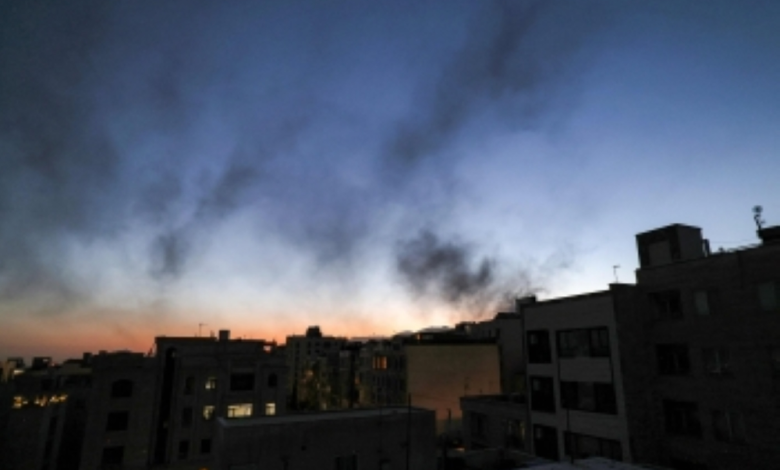

On Saturday evening, the Iranian capital, Tehran, witnessed rapid developments that sparked anticipation and anxiety. Two powerful explosions rocked the eastern part of the city, sending a massive plume of black smoke into the sky. These events come amidst what sources describe as a systematic bombardment of the country since the outbreak of the latest military confrontations involving the United States and Israel, indicating a new and more intense phase in the ongoing conflict.
Details of the explosions in eastern Tehran
According to an AFP correspondent, the two explosions were clearly heard at 6:00 PM local time (2:30 PM GMT). A thick plume of black smoke followed the blasts, suggesting that vital sites or flammable facilities were targeted. While no official statements were immediately released specifying the exact nature of the targets, press reports, including one from the newspaper Shargh, indicated heavy aerial activity over the targeted area, reinforcing the theory of direct airstrikes.
Naval losses and a shift in the balance of power
In a related development concerning the ongoing military operations, the United States announced that it had achieved significant strategic strikes deep within Iranian territorial waters. Washington declared that its forces had successfully sunk more than 30 Iranian vessels since the start of the military campaign. This announcement is a serious indication of the damage inflicted on Tehran's naval capabilities, which could directly impact the security of navigation in vital straits and Iran's ability to maneuver its ships in the Gulf.
Decline in missile and offensive capabilities
On the offensive front, a noticeable decrease has been observed in the frequency of attacks launched by Tehran using ballistic missiles and drones. Military observers believe this significant decline may be a result of sustained military pressure and the targeting of launch sites and command and control centers, or it may reflect a new Iranian strategy aimed at preserving strategic stockpiles amidst the intense bombardment. The coming days remain crucial in determining the course of this war and its geopolitical implications for the entire Middle East region.