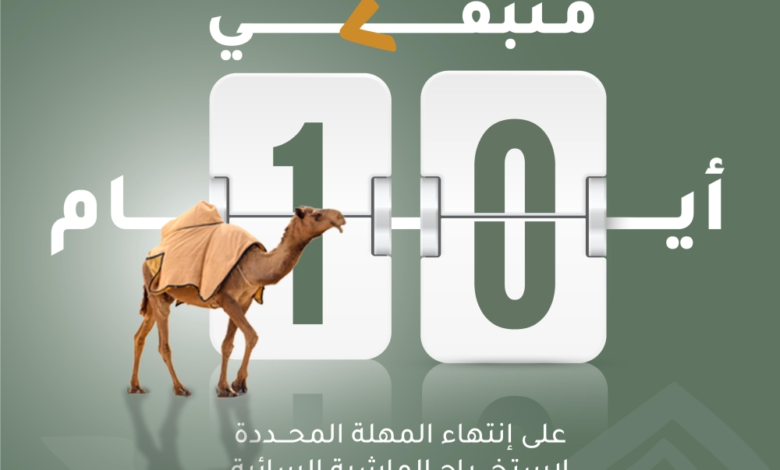

The King Salman bin Abdulaziz Royal Reserve Development Authority announced a 10-day grace period, beginning Thursday, April 9, 2026, for owners of stray livestock, including camels and other animals roaming the Arnan area. This crucial step to officially remove and collect the livestock is part of ongoing efforts to protect the natural environment and restore its balance.
General context and historical importance of the King Salman Reserve
Established by royal decree in 2018, the King Salman bin Abdulaziz Royal Reserve is the largest of its kind in Saudi Arabia, spanning a vast area of over 130,000 square kilometers. The reserve is distinguished by its unique geographical and biological diversity and encompasses important historical and archaeological sites. The Arnan region is a vital area within the reserve, requiring strict protection to ensure the restoration of its vegetation cover. These measures align with the Saudi Green Initiative, which aims to plant billions of trees and rehabilitate degraded lands, further solidifying the Kingdom's position as a leader in climate action regionally and internationally.
Risks of overgrazing and stray livestock
The authority strongly warned of the serious risks posed by stray livestock in highly sensitive environmental areas. Overgrazing and indiscriminate grazing destroy vegetation cover, accelerating desertification and soil erosion. The authority explained that preserving native plants and perennial trees plays a pivotal role in purifying the air, reducing temperatures, and forming natural barriers against winds and dust storms that affect urban areas. Furthermore, protecting biodiversity directly contributes to limiting the spread of animal diseases and epidemics, positively impacting the integrated ecosystem that the Kingdom seeks to protect in line with the objectives of Saudi Vision 2030.
Strict regulatory procedures and confiscation
To ensure the implementation of these decisions, the Authority affirmed that the regulations and laws in force in the Kingdom address the dangers of stray livestock with utmost rigor. It cited the Agriculture Law, which grants the Ministry of Environment, Water and Agriculture the full right to impound neglected livestock. It also referred to the Gulf Cooperation Council's Animal Welfare Law, which prohibits leaving animals neglected and unattended. The executive regulations stipulate the confiscation of animals in cases of repeated neglect, with the owner bearing all costs of transportation, healthcare, and veterinary services. The Authority clarified that owners must visit the Authority's center (Arnan Field) within the permitted period to obtain temporary entry permits. If the owners fail to appear, the competent authorities have the right to dispose of the confiscated animals by sale or donation after 15 days from the date of impoundment.
Security and regulatory integration and its sustainable impact
The Protected Area Development Authority clarified that the implementation of these regulations is carried out with high-level security coordination with the Ministry of Interior, represented by the Special Forces for Environmental Security, in accordance with the Environmental Law issued in 1441 AH. These forces are responsible for field monitoring to ensure environmental compliance, apprehending violators, and referring them to the relevant authorities, while providing the necessary security support to field inspectors. This firm enforcement of environmental laws has a positive impact locally by improving the quality of life, and internationally through the Kingdom's commitment to global treaties for the protection of biodiversity. The Authority concluded its statement by urging camel and livestock owners to take advantage of the specified grace period, emphasizing that compliance with the regulations reflects a national awareness of the importance of protecting natural resources and ensuring their sustainability for future generations.