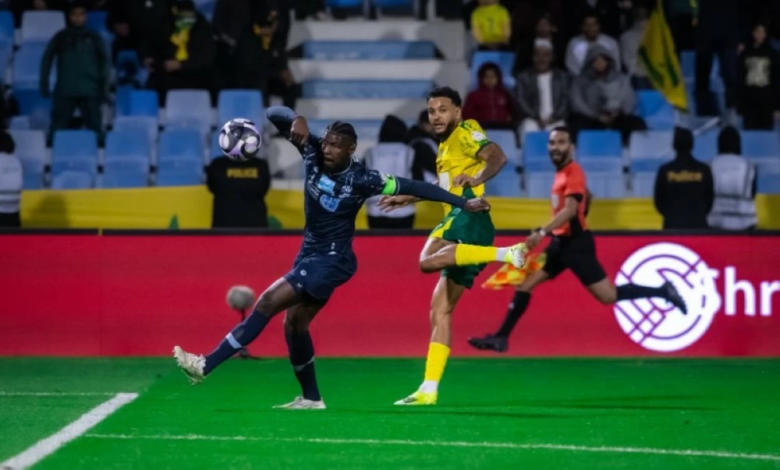

Al-Khaleej FC secured a resounding and well-deserved victory over Al-Akhdoud FC, winning 4-1 in a thrilling match held this evening at Prince Mohammed bin Fahd Stadium in Dammam. This match was part of the 16th round of the Saudi Professional League (Roshan League), and saw the home side dominate possession, converting their dominance into a flurry of goals.
Returning to the match itself, Al-Khaleej imposed their attacking style from the outset, with star player Joshua King breaking through Al-Akhdoud's defense and opening the scoring in the 37th minute, ending the first half with his team leading 1-0. At the start of the second half, Al-Khaleej continued their intense attacking pressure, with Giorgos Masouras quickly adding a second goal in the 50th minute, making the task even more difficult for the visitors and disrupting their tactical plans.
Al-Khaleej's scoring spree didn't end there. Kostas Fortounis extended their lead with a brilliant third goal in the 77th minute, before the in-form Giorgos Masouras added his second and his team's fourth in the 80th minute, confirming Al-Khaleej's dominant performance. In the dying moments of the match, specifically in the 90+2 minute, Abdulaziz Al-Hatila scored a consolation goal for Al-Akhdoud, ending the game with a resounding victory for Al-Khaleej.
This victory is of paramount importance to Al-Khaleej, reflecting the remarkable technical improvement and consistent results the team has enjoyed recently. This has enabled them to raise their points tally to 24, deservedly climbing to seventh place in the standings. This progress provides the team with a tremendous morale boost as they strive for a more comfortable mid-table position and move closer to the leading clubs, capitalizing on the brilliance of their foreign players and the harmony among their squad.
On the other hand, Al-Akhdoud's situation in the league is becoming increasingly complicated, as their points tally remains at just 8, leaving them in 17th place (second to last). This heavy defeat puts the team under immense pressure in their fight to avoid relegation, requiring their technical and administrative staff to quickly reassess their strategy to rectify the situation in the upcoming rounds of the Saudi League, which is witnessing fierce competition this season.