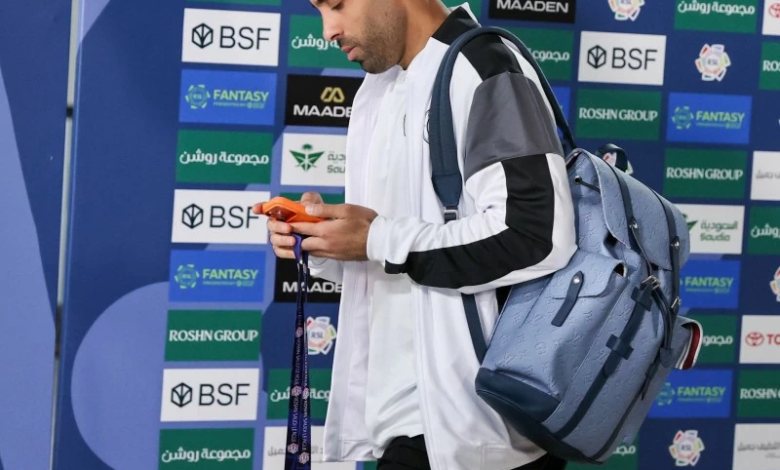
The Hamdallah-Carrasco crisis at Al-Shabab: Details of the penalty kick dispute

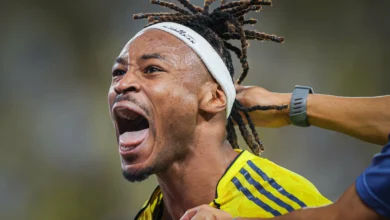
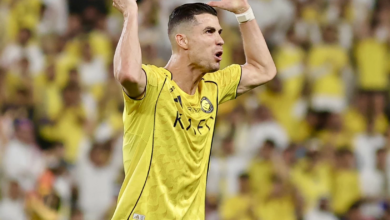
Moroccan star Abderrazak Hamdallah, the striker for Saudi club Al-Shabab, sparked widespread controversy and questions in sporting circles following a surprising act towards his club and his Belgian teammate Yannick Carrasco. These dramatic developments occurred after the team's match against Al-Riyadh, which Al-Shabab won, but the events surrounding the game overshadowed the joy of victory.
Details of the penalty kick incident
The crisis began on the pitch during the postponed match from the tenth round of the Roshan Professional League. At a crucial moment, the referee awarded a penalty to Al-Shabab, and tensions clearly surfaced between the team's two main attacking players. Hamdallah demanded to take the penalty to increase his goal tally, but team captain Yannick Carrasco insisted on his right to take it as the designated penalty taker, and he successfully converted it, completing his hat-trick of the match.
Hamdallah's reaction: Unfollow and digital tension
The story didn't end with the final whistle; it spilled over into the digital realm, where fans and followers noticed Abderrazak Hamdallah taking an escalatory step by unfollowing his teammate Carrasco's account, as well as the official Al-Shabab club account on Instagram. This action was widely interpreted as an expression of the Moroccan striker's anger over the situation, and his absence from the post-match celebrations with his teammates further fueled speculation of internal tensions.
The context of the crisis and its impact on the stability of the lions
This crisis comes at a sensitive time for Al-Shabab, a club striving to improve its position in the Saudi Pro League standings. The presence of two stars of the caliber of Hamdallah and Carrasco is a double-edged sword; on the one hand, the team possesses a formidable attacking force, but on the other hand, conflicting personal interests and the desire for prominence could destabilize the dressing room. Al-Shabab fans fear that this personal dispute will negatively impact the team's cohesion in upcoming matches, especially as the team desperately needs every point to climb the table.
Carrasco's statements and the management's stance
For his part, Belgian star Yannick Carrasco attempted to defuse the situation in his post-match media statements, expressing his delight at the 3-1 victory. He clarified his position regarding the penalty kick, stating, "Yes, I prevented Hamdallah from taking the shot because I am the team's designated penalty taker." He added, in a commanding tone, "I understand that the reaction might not be ideal in such situations, but we must prioritize the team's interests above all else.".
It's worth noting that this victory raised Al-Shabab's points tally to 25, placing them twelfth, while Al-Riyadh remained stuck on 16 points in fifteenth place. Fans are now awaiting intervention from the administrative and technical staff to address the issues and prevent further deterioration, thus preserving the team's achievements and technical stability.