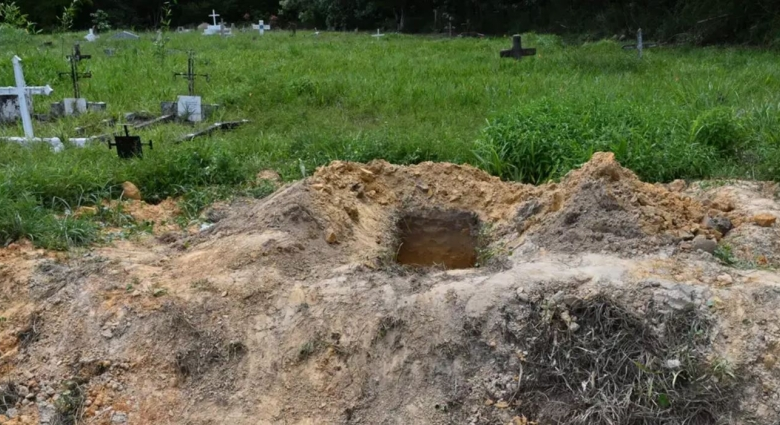

In a horrific incident that has shocked local and international public opinion, security authorities announced a disturbing discovery: the bodies of 50 infants and six adults were found in Trinidad and Tobago. Specifically, police discovered the remains on Saturday, apparently disposed of illegally in a local cemetery. This discovery has sparked widespread questions about the extent of crime and legal violations in the country.
Details of the investigations at the Komoto cemetery
Police reports indicate that initial investigations strongly suggest the case involves the illegal disposal of unidentified bodies. The bodies were discovered in a cemetery in Komoto, a township approximately 40 kilometers from the capital, Port of Spain. Authorities stated that the six adults—four men and two women—were found with identification cards near some of the bodies, which may aid in their identification.
Furthermore, two of the bodies showed clear signs of having undergone previous autopsies, adding another layer of mystery to the origin of the bodies and how they came to be there. Police confirmed they are currently conducting further forensic and medical analyses to accurately determine the bodies' origin and uncover any related violations. Police Commissioner Alistair Guevara described the incident as "deeply disturbing," emphasizing that law enforcement is treating the case with the utmost seriousness and is firmly committed to uncovering the truth.
General context and historical background of security in the country
To understand the dimensions of this incident, it's necessary to consider the broader context of Trinidad and Tobago. This Caribbean nation, located just 10 kilometers off the coast of Venezuela, has a population of approximately 1.5 million. Over the years, the country has faced significant security challenges and a marked increase in crime rates. According to a report by the U.S. State Department, the homicide rate reached 37 per 100,000 inhabitants, ranking Trinidad and Tobago as the sixth most dangerous country in the world in 2023.
Although the crime rate fell by 42% the year after that statistic, security challenges persisted. Historically, these tensions prompted former Prime Minister Kamla Persad-Bessar to declare a state of emergency in March after a resurgence of violence, reflecting an ongoing struggle between state institutions and organized crime networks.
The importance of the event and its expected impact locally and regionally
The discovery of these bodies is of great significance and has multifaceted implications. Locally, this incident exacerbates public discontent and anxiety regarding the effectiveness of security forces in protecting lives and combating heinous crimes, particularly those targeting vulnerable groups such as infants. Regionally, Trinidad and Tobago's geographical location makes it a sensitive transit point, and such incidents could raise concerns among neighboring countries and international organizations about the activities of organized crime gangs.
Internationally, this negative incident could affect the country’s tourism and economic reputation, which may prompt international human rights organizations to demand transparent and independent investigations to ensure that the perpetrators do not escape punishment, and to improve protocols for dealing with deaths and cemeteries in the country to ensure that such human tragedies are not repeated.