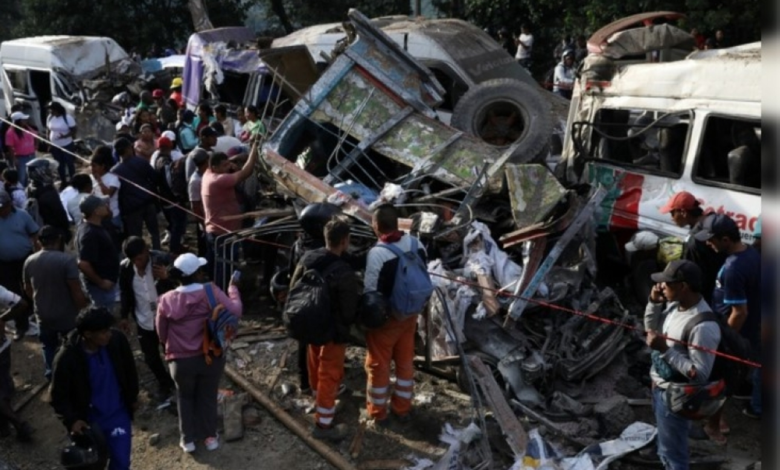

In a dangerous escalation of violence plaguing Colombia, the death toll from a roadside bomb attack in the southwestern province of Cauca has risen to 19, with at least 38 others injured. The horrific attack, which targeted buses and vans carrying civilians on a major highway, reflects the indiscriminate and brutal nature of the attack, which comes at a sensitive time before the presidential elections scheduled for next month.
Details of the attack and official reactions
Forensic authorities reported on Sunday that 19 bodies had been recovered, exceeding the initial death toll of 14. Cauca Governor Octavio Guzman confirmed that five minors were among the victims, while rescue teams continued searching for possible missing persons under the rubble. The explosion occurred on the Pan-American Highway after the attackers blocked the road with a bus and another vehicle, then detonated the explosive device, destroying several vehicles and overturning others with the force of the blast.
The Colombian government was quick to point the finger at dissidents of the Revolutionary Armed Forces of Colombia (FARC), specifically the faction that rejects the historic peace agreement signed in 2016. President Gustavo Petro described the perpetrators of the attack as “terrorists, fascists, and drug traffickers,” directly blaming Ivan Mordesco, one of the most prominent leaders of the dissidents and the country’s most wanted man.
The historical context of the conflict in Colombia
This attack comes amid a complex and protracted armed conflict in Colombia that has lasted for more than six decades, involving leftist rebel groups such as the FARC and the National Liberation Army (ELN), right-wing paramilitaries, drug cartels, and government forces. While a 2016 peace agreement with the majority of FARC fighters ended the conflict with the country's largest rebel group, splinter factions refused to lay down their arms. These groups, known as "disidencias de las FARC" (FARC dissidents), continue their criminal activities, financing their operations through drug trafficking, illegal mining, and extortion, and vying for control of strategic routes and rural areas, particularly in the volatile Cauca region.
The importance of the event and its expected impact
This attack represents a major blow to President Petro's "comprehensive peace" policy, which aims to end the conflict with all remaining armed groups through dialogue and negotiation. It increases pressure on the government to demonstrate its ability to protect civilians and enforce the rule of law in remote areas. Domestically, the attack has plunged the residents of Cauca into terror and disrupted economic life in a region already plagued by poverty and violence. Nationally, the attack is fueling political polarization ahead of the elections, with right-wing candidates exploiting it to advocate for a more aggressive security approach, potentially undermining long-term peace efforts. Internationally, the incident highlights the immense challenges facing post-conflict Colombia and underscores that the road to lasting peace remains long and fraught with peril.