Iran's Revolutionary Guard seizes two ships in the strategic Strait of Hormuz

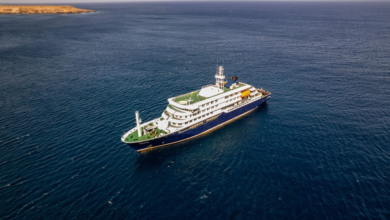
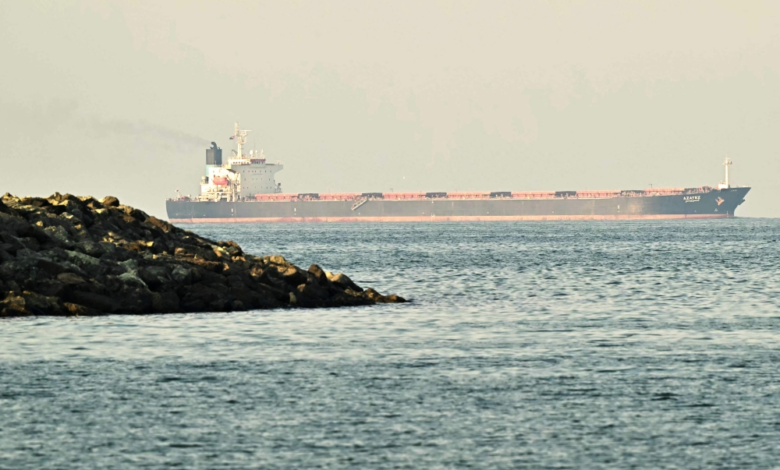
Iran's Revolutionary Guard announced on Wednesday the seizure of two vessels in the Persian Gulf for alleged violations, a move that recalls recurring tensions in the Strait of Hormuz, one of the world's most important waterways. According to a statement issued by the Revolutionary Guard, its naval forces spotted the two vessels in the morning, intercepted them, and escorted them to Iranian shores for legal proceedings.
This incident comes amid a series of recent events in the region. The United Kingdom Maritime Trade Operations (UKMTO) previously reported that a container ship was fired upon by Iranian vessels off the coast of Oman, resulting in material damage to the bridge but no injuries to the crew. UKMTO explained that the Revolutionary Guard vessels approached the Liberian-flagged ship and attempted to force it into Iranian territorial waters. When the ship refused, they opened fire. For its part, the Iranian news agency Tasnim justified the incident by claiming the ship ignored warnings from Iranian forces.
The strategic importance of the Strait of Hormuz
The Strait of Hormuz is a vital artery for the global economy, with nearly one-fifth of the world's daily oil consumption passing through it, in addition to vast quantities of liquefied natural gas. Connecting the Persian Gulf to the Gulf of Oman, the strait is an indispensable transit point for oil tankers from major Middle Eastern producing countries such as Saudi Arabia, the UAE, Kuwait, Iraq, and Iran. This waterway has long been a stage for geopolitical tensions, with Iran using its partial control over it as leverage in its confrontations with Western powers, repeatedly threatening to close it in response to sanctions or any potential military action.
Expected regional and international impacts
Such incidents have far-reaching regional and international repercussions. Economically, they contribute to higher shipping costs due to increased insurance premiums for vessels transiting the region, and can lead to fluctuations in global energy prices as a result of concerns about supply disruptions. Politically, they exacerbate tensions between Iran and Western countries, particularly the United States, whose naval forces, represented by the Fifth Fleet based in Bahrain, are responsible for protecting freedom of navigation in these waters. These events are often followed by international calls for restraint and reaffirmations of the need to ensure the safety of international waterways in accordance with international law, given their direct impact on global economic stability and regional security.