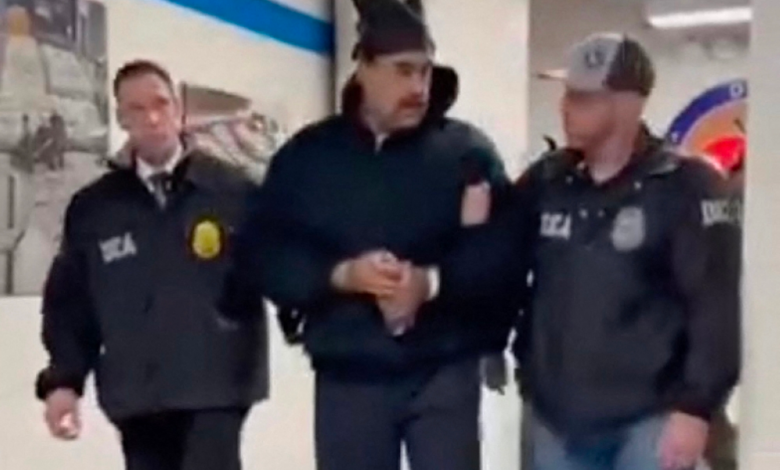

The US Federal Court in New York announced the postponement of the next hearing in the trial of ousted Venezuelan President Nicolás Maduro, originally scheduled for March 17, to March 26. This decision came in response to a request from the prosecution, which was accepted by Maduro's defense team. The prosecution cited "planning and logistical issues" that prevented the hearing from being held on the originally scheduled date, without providing further details about the nature of these obstacles.
Details of the trial and the charges
Nicolás Maduro, 63, appeared in court for the second time after his initial appearance on January 5, just two days after his capture in a U.S. military operation inside Venezuelan territory. Maduro pleaded not guilty to the charges against him, which mainly relate to drug trafficking and leading the Cartel of the Suns, emphasizing his status as a "prisoner of war"—a strategy his defense team appears poised to use to challenge the legitimacy of the trial.
Alongside Maduro, his wife Cilia Flores (69), known for her considerable influence in Venezuelan political circles, also appeared before a US court on the same date (March 26). Flores, too, pleaded not guilty to the charges against her, which relate to corruption, abuse of power, and illicit trafficking, making this trial one of the most prominent legal cases targeting heads of state in modern history.
The political landscape in Venezuela after Maduro
This event marks the end of Maduro's rule, which began in March 2013, following the death of his predecessor Hugo Chávez, and was scheduled to last until January 2026. His rule was characterized by an iron fist, crippling economic crises, and increasing international isolation. In the current presidential vacuum, Delcy Rodríguez, who has served as vice president since 2018, is assuming the duties of the interim president, amid international anticipation of the political transition in Caracas.
The historical and geopolitical dimensions of the event
The trial of Maduro in the United States has acquired exceptional significance that transcends its criminal dimension; it evokes rare historical instances of US judicial intervention in the trials of foreign heads of state, such as the case of Manuel Noriega in Panama. This event carries broad geopolitical implications, as the international community, particularly Venezuela's traditional allies in the region and beyond, closely monitors the outcome of this trial, which could redraw the map of alliances in Latin America and directly impact global energy markets and diplomatic relations between Washington and countries of the Global South.