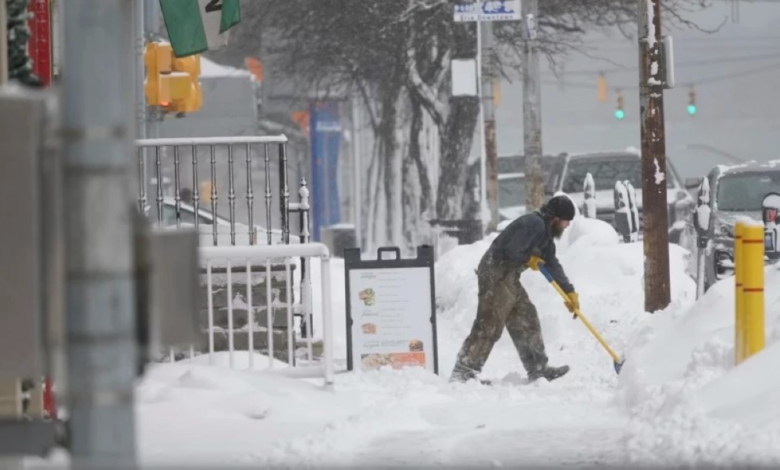
Winter storm hits America: Warnings issued for 40 states and a state of emergency declared

The US National Weather Service has issued severe warnings about a harsh cold wave and widespread winter storm expected to directly impact nearly 40 US states. The forecast indicates that this deep low-pressure system will begin to affect the region today and continue through the weekend, bringing with it a dangerous combination of heavy snow, freezing rain, and strong winds.
Half of America's population is under threat
According to official data, weather warnings and alerts cover approximately 160 million people, roughly half the population of the United States. This massive winter storm stretches geographically from the western United States in Arizona and Montana, through the central part of the country, to the East Coast in North Carolina and South Carolina, and as far north as Maine. This wide geographical coverage is a testament to the strength of the prevailing weather system and the size of the accompanying cold air mass.
Expected paralysis in travel and transportation
Meteorologists warn that the storm will cause significant disruption to daily life, particularly in the transportation sector. Major, densely populated cities such as Washington, D.C., Philadelphia, New York, and Boston are expected to experience widespread flight disruptions, with thousands of flights potentially canceled or delayed. Highways will also pose a serious hazard to drivers due to snow accumulation and the formation of black ice, prompting authorities to urge citizens to exercise extreme caution and avoid unnecessary travel.
Declaration of a state of emergency and infrastructure risks
In response to these alarming forecasts, New York Governor Kathy Hawkell swiftly declared a state of emergency, mobilizing all state resources to address the storm's aftermath. This proactive measure comes amid serious concerns about the storm's impact on infrastructure; the accumulation of ice on trees and power lines threatens widespread power outages that could last for days, posing significant challenges for millions of Americans, particularly in areas stretching from New Mexico to the Carolinas, as temperatures plummet.
Climate context and the recurrence of extreme phenomena
This wave comes amid a climate trend of increasingly frequent extreme weather events, with the United States periodically experiencing polar storms caused by jet stream ripples that allow cold polar air to penetrate southward. Such events require extensive logistical preparations by federal and local agencies to ensure public safety and minimize economic losses from business disruptions and trade shutdowns.