The Emir of Qatar and Assad: Support for stability and signs of diplomatic rapprochement

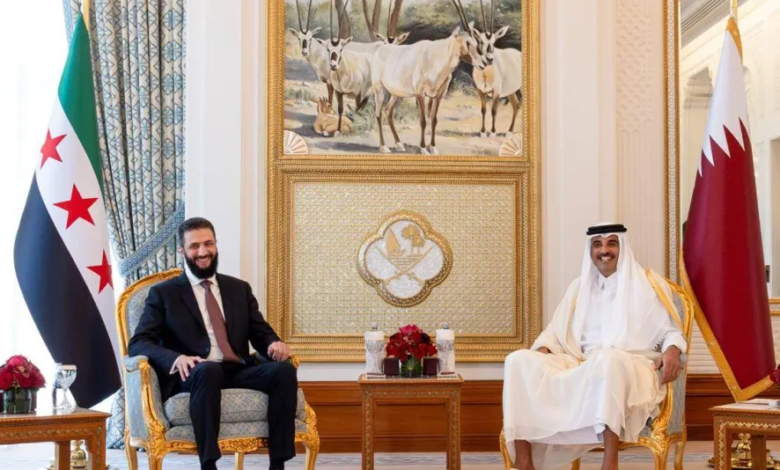
In a diplomatic development reflecting the rapidly evolving geopolitical landscape of the Middle East, the Emir of Qatar, Sheikh Tamim bin Hamad Al Thani, held talks with Syrian President Bashar al-Assad, focusing on the importance of supporting and strengthening stability in the region. This move represents a significant indication of the potential for a new chapter in relations between Doha and Damascus after more than a decade of diplomatic estrangement following the outbreak of the Syrian crisis in 2011.
Historical background and changing regional context
Qatari-Syrian relations were completely severed from the early years of the Syrian conflict, as Qatar was one of the most prominent political and financial supporters of the Syrian opposition and adopted a firm stance calling for a political solution that did not include President Assad remaining in power. This position led to the suspension of Syria's membership in the Arab League and the closure of embassies between the two countries. However, recent years have witnessed a gradual shift in the regional landscape, with several Arab states, most notably the United Arab Emirates and Saudi Arabia, beginning to normalize their relations with Damascus. This move aims to reintegrate Syria into the Arab fold and reduce the regional influence of non-Arab actors in the Syrian arena.
This trajectory culminated in Syria's return to its seat in the Arab League in May 2023, a move initially met with reservations from Qatar, which stressed the need for a just political solution that first and foremost fulfills the aspirations of the Syrian people. Therefore, these recent talks between the two leaderships represent a significant, albeit cautious, shift in Qatar's position, aligning with the broader Arab consensus on the necessity of engaging directly with Damascus to address contentious issues.
The importance of the event and its expected impact
These talks are of strategic importance on several levels. Regionally, this step strengthens Arab efforts to build a joint regional security system based on dialogue and conflict resolution. It may also pave the way for potential Qatari mediation in the Syrian crisis in the future, given Doha's good relations with various regional actors, including Turkey. On the Syrian front, any rapprochement with a country of Qatar's economic and political stature could help alleviate Syria's economic isolation and perhaps open avenues for participation in the future reconstruction phase, a priority for the Syrian government. Internationally, this development is seen as part of a reshaping of alliances in the Middle East, where Arab states are seeking to take the initiative in resolving their issues, independent of international polarization, and focusing on shared interests such as economic security, combating terrorism, and mitigating the impact of crises on the stability of the region as a whole.