
Macron's statements open the door to debate about the future of European security
French President Emmanuel Macron reignited the debate surrounding the future of European security during his recent visit to Greece, asserting that the European Union's collective defense clause possesses greater binding force than its NATO counterpart. During a joint press conference with Greek Prime Minister Kyriakos Mitsotakis, Macron referenced Article 42.7 of the Treaty on European Union, which obligates member states to provide assistance and support by all available means to a member state that is the victim of armed aggression on its territory.
Macron explained that this article is a “fixed clause that leaves no room for choice,” comparing it to Article 5 of the NATO treaty, which, despite its prominence, is seen by some as allowing more room for political interpretation regarding the nature of the response. These remarks reflect a long-standing French vision of the need to build “strategic autonomy” for Europe, enabling it to defend its interests and security independently.
Historical context and a renewed French vision
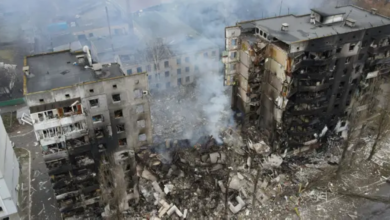
Macron’s calls were not a spur-of-the-moment decision, but rather an extension of a long-standing French position seeking a balance in its relationship with the United States within NATO. Since NATO’s founding as a bulwark against the Soviet threat, France has viewed American hegemony with suspicion. President Macron himself described NATO as experiencing “brain death” in 2019, a statement that angered many allies. Today, in light of Russia’s war in Ukraine and growing doubts about the commitment of future US administrations to European security, particularly given the pronouncements of former President Donald Trump, Macron’s calls are finding greater resonance in some European capitals.
Importance and expected impact on the international stage
These statements carry significant weight both regionally and internationally. At the European level, they aim to encourage EU member states to increase their defense investments and coordinate their military capabilities outside the NATO framework. Macron is already working with British Prime Minister Keir Starmer to organize international conferences to promote this cooperation. The French president is also advocating for a greater role for the French armed forces, including the possibility of extending France's nuclear deterrent umbrella to include European allies, as an alternative to or complement to US guarantees.
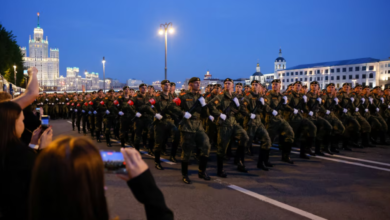
Internationally, these steps are seen as a message to both Washington and Moscow. They tell the United States that Europe is preparing for a time when it may be less dependent on the American security umbrella, while demonstrating to Russia that the European continent is working diligently to strengthen its collective defense capabilities. Nevertheless, this vision still faces challenges, particularly from Eastern European countries that view NATO and the American presence as the most important guarantee of their security against Russia.