Iranian missiles intercepted in Türkiye and the UAE | Details and repercussions

Regional tensions escalate: Türkiye intercepts fourth ballistic missile
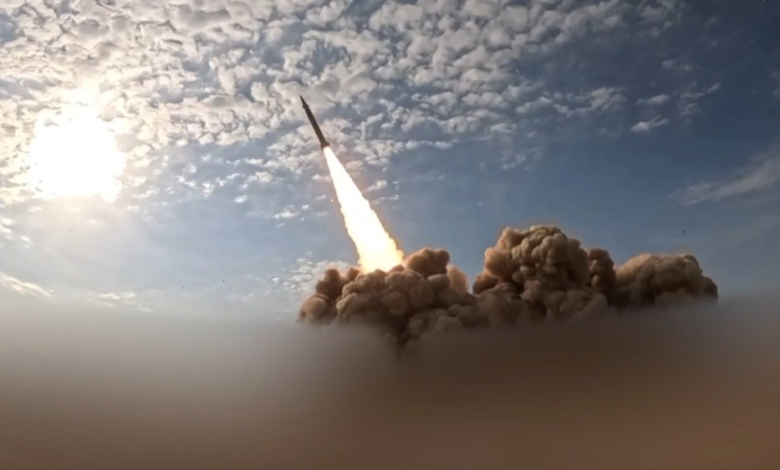
In a security development reflecting the escalating tensions in the Middle East, the Turkish Ministry of Defense announced on Monday that it had successfully intercepted a fourth ballistic missile launched toward its territory, an attack attributed to Iran. The ministry explained in an official statement that NATO air and missile defense systems deployed in the eastern Mediterranean region neutralized the ballistic missile after it was determined to have been launched from Iranian territory and penetrated Turkish airspace. This incident underscores the strategic importance of NATO's missile shield in Turkey, which aims to protect the alliance's southeastern flank from growing ballistic threats.
The UAE counters Iranian missile and drone attacks
In a related development, and amid the security threats facing the region, the UAE's air defense systems announced the successful interception of a large-scale attack. According to reports, 11 ballistic missiles and 27 drones launched from Iran were intercepted. This escalation is not the first of its kind, but rather part of a series of ongoing security challenges. The Emirates News Agency (WAM) reported that since the beginning of Iran's blatant aggression in the region, UAE air defenses have effectively dealt with approximately 425 ballistic missiles and 15 cruise missiles, in addition to shooting down 1,941 drones. These figures highlight the scale of the ongoing threat and the high level of readiness of the UAE Armed Forces, which rely on state-of-the-art defense systems to protect its airspace and national assets.
Historical context and development of missile capabilities
These developments unfold within a complex historical context marked by a regional arms race and deep geopolitical tensions. Over the past decades, Iran has developed a massive arsenal of ballistic missiles and drones, which it considers a cornerstone of its military strategy. In response, neighboring countries, including Turkey and the Gulf Cooperation Council (GCC) states, have bolstered their defense capabilities in cooperation with their international allies. The use of airspace belonging to neighboring states, or the direct or indirect targeting of these states, evokes memories of past incidents that triggered widespread security mobilizations and underscores the fragility of the security situation in the Middle East.
Expected impact at the regional and international levels
These missile attacks and interceptions have serious repercussions for international peace and security. Regionally, these incidents exacerbate polarization and push countries in the region toward further military alliances and increased defense spending to secure their borders and airspace. Internationally, any military escalation involving countries like Turkey (a NATO member) and the UAE (a global economic hub) threatens the stability of global energy markets, maritime navigation, and international trade. These developments are expected to provoke widespread international reactions, calls for UN intervention to curb the proliferation of missile and drone technology, and strong appeals for restraint and avoidance of a full-blown military confrontation.