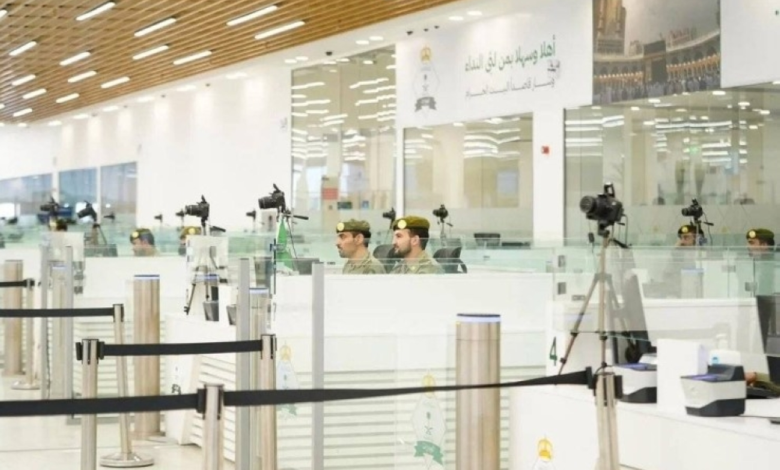
Saudi Passports announces the latest technologies to facilitate the entry of pilgrims

Saudi passport authorities' preparations for the Hajj season of 1447 AH
The General Directorate of Passports in the Kingdom of Saudi Arabia announced its complete readiness to receive pilgrims arriving to perform Hajj this year (1447 AH). The Directorate confirmed that all arrival and departure procedures will be conducted smoothly and efficiently through all of the Kingdom's international ports of entry—air, land, and sea—ensuring a seamless and comfortable experience for pilgrims from the moment they arrive in the Holy Land.
Harnessing the latest technologies to facilitate the entry of pilgrims
In its ongoing efforts to enhance its services, the General Directorate of Passports has affirmed its commitment to utilizing all available technological and human resources to facilitate the entry procedures for pilgrims. This includes equipping its platforms at various entry points with the latest advanced technologies, such as biometric fingerprint and facial recognition systems, which expedite identity verification and reduce waiting times. These platforms are also staffed with highly qualified and trained personnel who speak the various languages of the pilgrims, ensuring effective communication and providing necessary assistance to each pilgrim in their native tongue.
The Makkah Route Initiative: A qualitative leap in serving the pilgrims
The General Directorate of Passports' efforts are complemented by the ongoing expansion of the "Makkah Route" initiative, a leading initiative of the Ministry of Interior within the "Guests of God Service Program," which is one of the most important programs of Saudi Vision 2030. This initiative aims to complete pilgrims' entry procedures in their home countries before their departure, meaning that pilgrims arrive in the Kingdom as domestic travelers. The initiative has been expanded to include 17 entry points in 10 countries worldwide: the Kingdom of Morocco, the Republic of Indonesia, Malaysia, the Islamic Republic of Pakistan, the People's Republic of Bangladesh, the Republic of Turkey, the Republic of Côte d'Ivoire, the Republic of Maldives, and, for the first time, the Republic of Senegal and Brunei Darussalam.
Historical context and digital transformation in the Hajj system
Historically, the Hajj pilgrimage involved lengthy and complex paperwork upon arrival at Saudi Arabia's entry points, resulting in long waiting times for pilgrims after arduous flights. However, with the launch of Saudi Vision 2030, the Hajj and Umrah system has undergone a radical digital transformation. The Kingdom has transitioned from traditional systems to fully integrated electronic systems, from issuing e-visas to pre-clearance procedures, reflecting the Saudi leadership's commitment to harnessing technology to serve Islam and Muslims.
Importance and expected impact locally and internationally
This technological and organizational development has far-reaching positive effects. Domestically, it significantly contributes to alleviating congestion and managing crowds efficiently at major Saudi airports, such as King Abdulaziz International Airport in Jeddah and Prince Mohammad Bin Abdulaziz Airport in Madinah, thus enhancing the quality of logistical services. Regionally and internationally, these measures reinforce Saudi Arabia's position as a global leader in managing large crowds and utilizing artificial intelligence and modern technologies, providing pilgrims from around the world with a sense of comfort and security, which positively impacts the global perception of the services provided to pilgrims.