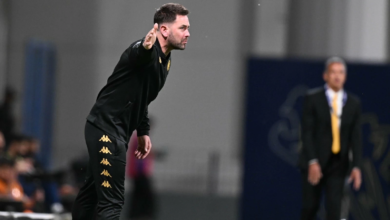

In shocking news for football fans worldwide, Brazilian star Oscar, currently playing for São Paulo and formerly for Chelsea, announced his retirement from football at the age of 34. This difficult and sudden decision came after he suffered a serious heart attack that nearly claimed his life. His heart stopped for two and a half minutes, forcing him to end his illustrious professional career to protect his health.
Details of the terrifying health crisis
Oscar revealed the harrowing details of his ordeal in a moving video posted by São Paulo FC on their official social media accounts. The player explained that during preseason training, specifically in November 2025, he underwent a routine fitness test. During this test, he experienced a sudden and severe drop in blood pressure, causing him to lose consciousness and his heart to temporarily stop.
Oscar, his voice filled with emotion, said: “It was a real shock. My heart stopped for two and a half minutes. Today I’m feeling much better and can talk about what happened. My blood pressure dropped, my heart stopped, and the medical staff immediately performed CPR to save my life.” He was later diagnosed with vasovagal syncope, a condition requiring close monitoring and care, making his return to the pitch a risky proposition.

A golden career: from Brazil to European stadiums
Oscar is considered one of the most prominent attacking midfielders of his generation, earning the nickname "The Brazilian Jewel" early in his career due to his exceptional individual skills, precise passing, and keen vision on the field. He began his football career with São Paulo FC, where he attracted the attention of major European clubs.
In 2012, he moved to English club Chelsea in a huge deal worth around £32 million. At Stamford Bridge, Oscar made history, playing a pivotal role in the team's Premier League title win in the 2014-2015 season, as well as winning the Europa League title in 2013, forming a formidable attacking force in European football.
Playing professionally in China and returning to one's roots
In a move that surprised the global sports world in 2016, Oscar decided to transfer to Chinese club Shanghai Port for a record fee of approximately €60 million, becoming one of the key figures who spearheaded the Chinese Super League's revolution at the time. He spent several successful years there, winning numerous domestic titles, before deciding to return to his boyhood club, São Paulo, in December 2014, to finish his career where it began.
International imprint with the Samba team
Internationally, Oscar was a key player for the Brazilian national team for several years. He won the Confederations Cup with the Seleção in 2013 and was one of the standout players at the 2014 World Cup held in Brazil, where he is remembered for scoring his country's only goal in the infamous 7-1 defeat to Germany.
Heart attacks in stadiums: a constant warning bell
Oscar's case has once again highlighted the phenomenon of heart attacks on football pitches, which has become a major concern for clubs and sports federations. This incident is reminiscent of what happened to Danish star Christian Eriksen during the European Championship, as well as Argentinian Sergio Aguero, who was forced to retire for similar reasons. This underscores the critical importance of regular medical checkups and the swift medical intervention that saved Oscar's life.
The end of the journey and the beginning of a new phase
Oscar concluded his speech with touching words, saying: “Today I end my career at São Paulo FC, the place where I grew up. Coming back again made me happy. It’s difficult because I wanted to give more to the club. I had the talent and the right age, but unfortunately this happened. Now I will retire and continue to support the team as a fan and lover.”.
With this announcement, the page is turned on one of the most skilled Brazilian players of the last decade, leaving behind a distinguished football legacy and a powerful lesson that health and life are always more valuable than any sporting achievement.