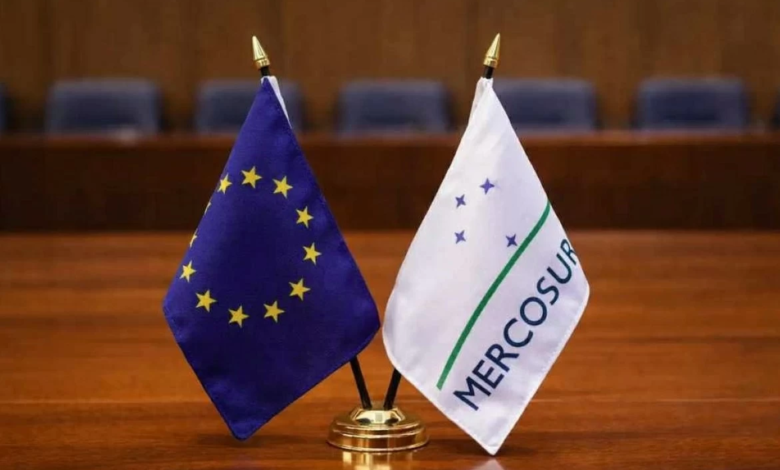

After marathon negotiations spanning nearly a quarter of a century, the landmark free trade agreement between the European Union and the Mercosur bloc in Latin America has provisionally entered into force. This development marks a turning point in global trade relations, creating one of the world's largest free trade blocs and sending a powerful message of support for multilateralism in the face of rising protectionist policies.
Mercosur comprises four of South America's largest economies: Brazil, Argentina, Uruguay, and Paraguay. This agreement creates a vast market serving nearly 780 million consumers, opening new opportunities for businesses and exporters on both sides of the Atlantic.
Historical background and complex negotiations
Formal talks between the two blocs began in 1999, but have faced repeated obstacles over the years due to divergent economic and political interests. The main point of contention has been access for Mercosur agricultural products to the European market in exchange for opening South American markets to European industrial goods and services, such as automobiles, machinery, and pharmaceuticals. Political shifts within Mercosur and global economic crises repeatedly stalled negotiations before a preliminary political agreement was reached in June 2019.
Economic importance and expected impact
The agreement primarily aims to boost trade by gradually eliminating tariffs on most traded goods. According to the European Commission, the agreement is expected to save European companies more than €4 billion annually in tariff reductions, making it the largest trade agreement the EU has ever concluded in terms of tariff cuts. The European automotive, chemical, and machinery sectors will benefit significantly, while the agreement will boost Mercosur exports of agricultural products such as beef, poultry, sugar, and ethanol.
Environmental challenges and agricultural concerns
Despite its promising economic benefits, the agreement sparked widespread controversy and significant concerns, particularly in Europe. European farmers, especially in countries like France and Ireland, expressed worries about unfair competition from agricultural products originating from Mercosur, which are produced at lower costs and may adhere to different environmental and health standards. Environmental issues, primarily deforestation in the Amazon, also posed a major obstacle to ratification, with several European parliaments linking their approval to Mercosur countries', and especially Brazil's, commitment to the Paris Climate Agreement and to protecting the rainforest.
Guarantees and temporary application
To address these concerns, the agreement included provisions relating to sustainable development and safeguards for certain sensitive agricultural products. However, full implementation is still a long way off, as the agreement requires ratification by the European Parliament as well as the parliaments of all EU member states. Until this complex process, which could take years, is completed, the agreement's application will remain provisional and conditional, reflecting the scale of the political challenges that continue to confront this major trade achievement.