Reasons for the decline in European stocks as the blockade of the Strait of Hormuz begins

European stocks fell amid escalating tensions in the Middle East
Amid the rapidly evolving geopolitical situation in the Middle East, a sense of caution and anxiety has gripped global investors. With the implementation of the US blockade on the strategic Strait of Hormuz, European stocks experienced significant declines at the close of the first trading session of the week. This decline reflects genuine concerns about the impact of these tensions on global energy supplies and the recovery of the European economy, which is heavily reliant on stable fuel prices.
European indices performance in numbers
At the close, red screens dominated the markets, with the Stoxx Europe 600 index falling 0.16% to 613 points, driven by negative performance across most key sectors. Other major European markets were not immune to these losses; the UK's FTSE 100 index declined 0.17% to settle at 10,582 points. In Germany, the DAX index dropped 0.26% to 23,742 points, while France's CAC 40 index fell 0.29% to close at 8,235 points.
Historical background and strategic importance of the Strait of Hormuz
To understand the immediate impact of these events, one must consider the geoeconomic importance of the Strait of Hormuz. This waterway, connecting the Persian Gulf, the Gulf of Oman, and the Arabian Sea, is one of the world's most vital shipping lanes. Historically, roughly one-fifth of the world's crude oil consumption, along with vast quantities of liquefied natural gas, has passed through it. Any threat to or closure of this crucial waterway would automatically trigger a shock to global energy prices, which explains the rapid panic that gripped financial markets and the transportation sector.
The failure of negotiations and the repercussions of the blockade decision
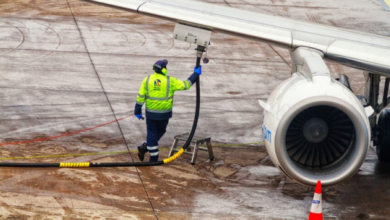
These sharp market declines followed the collapse of diplomatic negotiations between the United States and Iran over the weekend. In an escalation, US President Donald Trump imposed a blockade on the Strait of Hormuz, which went into effect earlier today. This decision has had a direct and negative impact on the European travel and leisure sector, amid growing concerns that the disruption to shipping in this vital waterway will be prolonged, inevitably leading to higher shipping costs and a severe impact on jet fuel supplies.
The expected regional and international impact and the tariff war
Regionally, this move exacerbates instability in the Middle East, potentially prompting marine insurers to significantly raise their premiums for vessels transiting the region. Internationally, the impact extends beyond oil prices. In addition to the turmoil in the energy market, global concerns have intensified following President Trump's threat to impose "staggering tariffs" of up to 50% on China if it is found to be providing military assistance to Iran. This threat raises the specter of a new trade war that could disrupt global supply chains and weaken the prospects for global economic growth, leading investors to seek safe havens and shy away from stock markets.