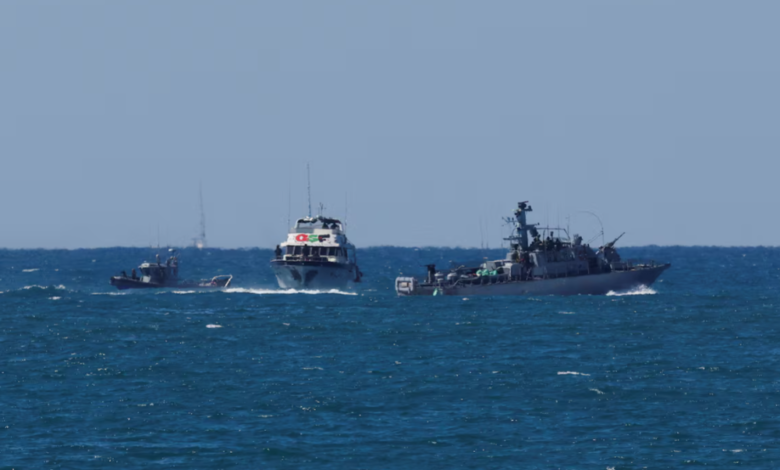

In a new escalation of events in international waters, Israeli naval forces intercepted the "Steadfastness Flotilla," carrying 211 international activists, as it attempted to break the years-long blockade of the Gaza Strip. The interception took place off the coast of the Greek island of Crete, a move that drew condemnation from the organizers and numerous international human rights organizations.
In an online press conference, Hélène Couron, spokesperson for Global Resilience France, stated that the operation took place in international waters, far from the Israeli coast, raising questions about its legality. Couron confirmed that 11 French citizens were among those detained, noting that the flotilla included activists of various nationalities representing 48 international delegations, all united by the humanitarian goal of delivering aid and raising awareness of the suffering of Gaza's residents.
Historical background of the Freedom Flotilla and the Gaza blockade
The “Steadfastness Flotilla” is not the first attempt of its kind, but rather an extension of a series of initiatives known as the “Freedom Flotilla,” which began to emerge after Israel tightened its land, sea and air blockade on the Gaza Strip in 2007. According to Israel, this blockade aims to prevent weapons from reaching Palestinian factions, but international human rights organizations and the United Nations consider it collective punishment that exacerbates the humanitarian crisis for the more than two million residents of the Strip.
The most infamous incident in the history of these flotillas is the 2010 attack on the Turkish ship Mavi Marmara, which resulted in the deaths of several Turkish activists at the hands of Israeli commandos, leading to a severe diplomatic crisis between Turkey and Israel. Since then, attempts to send ships to break the blockade have continued, carrying a political and humanitarian message that goes beyond simply delivering material aid.
The importance and expected impact of the event
The significance of such events lies in their ability to refocus media and international attention on the ongoing blockade of the Gaza Strip. While the amount of aid these ships carry is often symbolic, their primary objective is political and human rights-based, aiming to challenge the legitimacy of the blockade and draw global attention to the deteriorating humanitarian situation in the Strip.
Internationally, this detention is expected to provoke diplomatic reactions, particularly from the countries of origin of the detained activists, such as France. These events are also prompting human rights organizations to renew their calls on the international community to pressure Israel to lift the blockade, which they consider a violation of international humanitarian law. In the long term, these initiatives help keep the Palestinian issue alive in the global consciousness and remind the world of its moral and legal obligations toward the besieged civilians.