
The Public Transport Authority announced record-breaking figures in the intercity bus transport sector across Saudi Arabia, with over 936,000 passengers utilizing these services during the first quarter of this year. The number of completed trips exceeded 43,000, reflecting the growing popularity of public transport as a reliable and economical mode of transportation throughout the Kingdom.
Strategic background: Public transport at the heart of Vision 2030
This remarkable growth comes as part of the Kingdom's ongoing efforts to develop its transportation and logistics system, a key pillar of Saudi Vision 2030. The National Transport and Logistics Strategy aims to transform the Kingdom into a global logistics hub and enhance the quality of life for citizens and residents by providing safe, efficient, and sustainable transportation options. Historically, intercity travel has relied heavily on private cars, but investment in modern bus networks is beginning to change this dynamic, offering an alternative that helps reduce traffic congestion and carbon emissions.
Details of operational performance and leading major cities
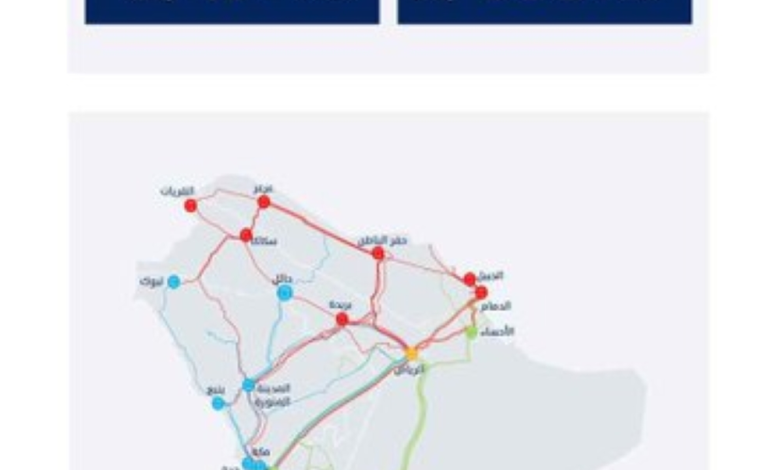
The detailed figures reveal the dominance of cities with high population density and religious and economic significance. Mecca ranked first, receiving 313,211 passengers, reflecting its importance as a major religious destination. The capital, Riyadh, came in second with 197,151 passengers, given its status as the Kingdom's administrative and commercial center. The Eastern Province ranked third with 138,715 passengers, underscoring its vital role as a major industrial and economic hub.
The remaining numbers were distributed among other major cities, with Madinah recording 64,575 passengers, followed by the cities and governorates of the Asir region with 50,426 passengers, then Tabuk with 41,428 passengers, while the rest of the numbers were distributed among the rest of the cities of the Kingdom.
Importance and expected effects
Expanding public bus services has numerous positive impacts. Locally, it facilitates the daily commutes of employees and students, reduces travel costs for families, and provides a safe option for everyone. Regionally and internationally, strengthening the transport network directly supports the tourism sector, whether religious or leisure tourism, and facilitates business and trade between different regions. These services rely on a modern bus fleet equipped with the latest technologies, amenities, and safety features, operating on regular schedules, thus enhancing the user experience and strengthening their confidence in the public transport system.