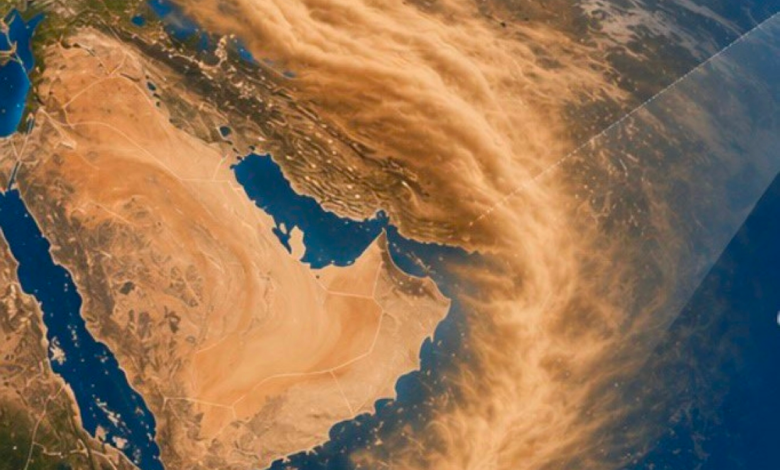

The Regional Center for Dust and Sandstorm Warning announced that it had detected 141 instances of dust activity in a number of countries in the region in one day, as part of its ongoing efforts to monitor weather phenomena and provide accurate data to support decision-making and enhance regional preparedness to confront these recurring natural phenomena.
Details of the observed cases and their geographical distribution
The report issued by the center explained that the Kingdom of Saudi Arabia recorded the highest number of dust storm incidents, with 60 cases, reflecting its significant vulnerability to desert dust sources. This was followed by the Hashemite Kingdom of Jordan with 34 cases, then the Republic of Iraq with 19 cases, the Arab Republic of Egypt with 17 cases, and the Islamic Republic of Pakistan with 11 cases. The center noted that no dust storm incidents were recorded in the remaining countries of the region during the same monitoring period, emphasizing that this data is part of the advanced monitoring and analysis system adopted by the center.
The climatic and environmental context of dust storms
The Middle East and North Africa region is part of the global “dust belt,” where vast deserts such as the Sahara and the Rub' al Khali contribute significantly to sand and dust storms. This natural phenomenon is exacerbated by several factors, most notably climate change, which leads to increased drought, vegetation degradation, and desertification. Human activities, such as overgrazing and the draining of water bodies, also play a role in loosening the soil and making it more susceptible to being blown away by strong winds, particularly the seasonal northerly winds that are active during the spring and summer months.
The importance and expected effects of the phenomenon
Dust storms have far more than just reduced horizontal visibility; they impact multiple vital sectors. From a health perspective, the fine particulate matter suspended in the air causes severe respiratory problems, particularly for asthma and allergy sufferers, the elderly, and children. Economically, these storms paralyze air and land transportation, disrupt operations in the construction and agricultural sectors, and negatively affect the efficiency of solar power plants. These phenomena pose a transnational challenge, as dust can travel thousands of kilometers, affecting air quality in distant regions. This necessitates concerted regional and international efforts to mitigate their causes and minimize their impact.
The center stressed the importance of following its periodic updates, calling on the public to adhere to preventive guidelines, especially in the most affected areas, in order to preserve public safety and reduce potential risks.