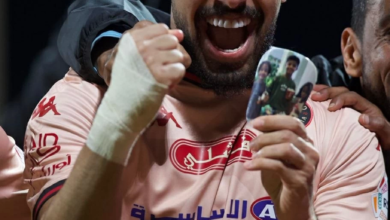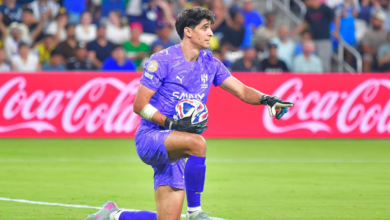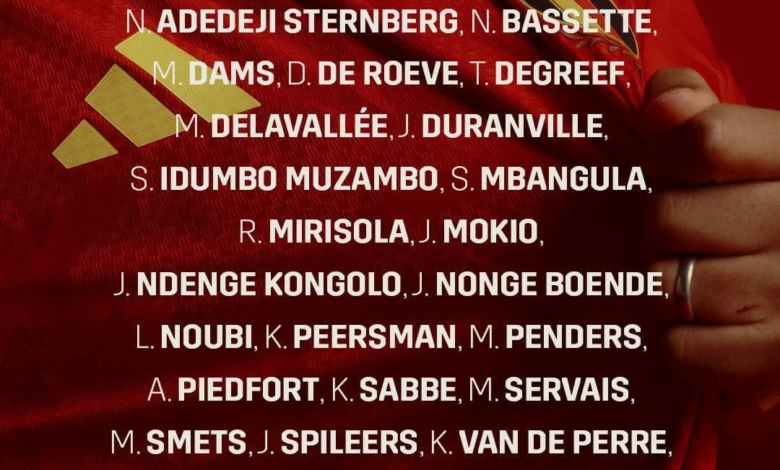
Al Ahly player Matthieu Dames has been called up to the Belgian under-21 national team

Matthieu Dames called up to the Belgian under-21 national team
The Belgian Football Association has officially announced the call-up of talented young player Matthieu Dames, who plays for Al Ahly, to the final squad for the Belgian under-21 national team. This significant move, coming during the upcoming international break, underscores the player's remarkable development and his ability to attract the attention of European national team coaches, and is a culmination of his consistent efforts on the pitch.
Outstanding performance and outstanding levels
This call-up didn't come out of nowhere; it was the result of the impressive levels and outstanding performances that Matthieu Dames has delivered recently with his club. The player proved his worth through his effective contributions and positive impact on the pitch, prompting the Belgian youth national team's coaching staff to grant him this golden opportunity. Being included among a group of talented young players is a reward for his efforts and preparation for upcoming challenges that demand a high level of physical, technical, and tactical readiness.
Historical context: The Belgian football school
Historically, Belgium is known for having one of the strongest football academies in Europe and the world for discovering and developing young talent. Belgian football academies have produced what is known as the "Golden Generation," which included legends and shining stars who dominated European football for years. The under-21 national team is considered the main gateway and the final step before reaching the senior national team. Therefore, any player joining this team reflects great confidence in their abilities and immediately puts them on the radar of the Belgian national team's head coach.
The importance of the event and its expected impact
On an individual level, joining Al-Ahli is a pivotal step in his international career, as it will expose him to different footballing styles and provide invaluable international experience by facing strong European teams. Regionally and internationally, the presence of a professional player from Al-Ahli in a prestigious European national team like Belgium highlights the high level of competition at his club and enhances the team's reputation for attracting and developing players with international potential, capable of representing their countries at the highest level.
Furthermore, the Belgian national team is currently undergoing a significant transition, as the Belgian Football Association seeks to rejuvenate the squad and bolster its ranks with promising young talents following the decline in performance of the previous generation. The current international break presents an ideal opportunity to test these young players in competitive matches and assess their ability to handle international pressure.
Future aspirations
In conclusion, this move reflects the growing confidence in Matthieu Dames' technical abilities. With the Belgian national team looking to bolster its ranks with the best available talent, Dames will have to prove himself and seize this opportunity to secure a regular starting position, which could open the doors to footballing glory for him in the near future.