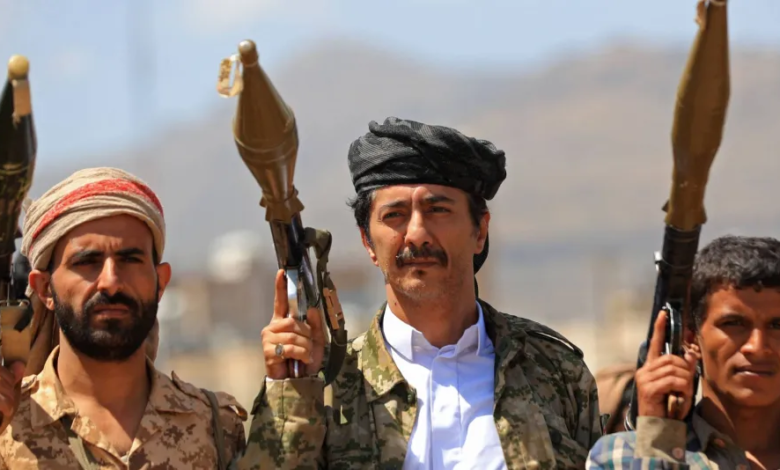
The Houthis are fueling tribal conflicts to consolidate their control in Ibb

Ibb Governorate in central Yemen is witnessing a marked escalation in tribal conflicts, an escalation that appears to be neither spontaneous nor part of a systematic strategy employed by the Houthi group to consolidate its control and tighten its security and military grip on the governorate. This strategy relies on reigniting old disputes and fueling tribal feuds, thereby exhausting societal forces and preoccupying them with internal conflicts that prevent them from uniting or forming any opposition front against the de facto authority.
General context and historical background of the event
Since the Houthi group seized control of the capital, Sana'a, and expanded into other governorates in late 2014, Ibb Governorate, known as the "Green Brigade," has acquired significant strategic importance due to its geographical location linking northern and southern Yemen, and its high population density. Historically, Ibb has been relatively peaceful compared to the traditionally tribal conflict zones in the far north, but the tribal structure still plays a significant role in social dynamics. Recognizing the difficulty of achieving absolute control through military force alone, the Houthis resorted to a "divide and rule" policy, a historical tactic employed by successive authorities, but one that has been implemented more thoroughly and brutally in recent years to ensure the suppression of any popular resistance.
Mechanisms that fuel tribal conflicts in Ibb
The Houthi group employs a variety of tactics to fuel these conflicts in Ibb. Human rights and local reports indicate that the group's supervisors supply the warring parties with weapons and ammunition, turn a blind eye to armed mobilization, and even intervene on behalf of one side against another to ensure the continuation of the stalemate. Disputes over land and property, a major source of conflict in Ibb, are exploited to escalate into brutal armed clashes. This approach not only weakens the tribes but also establishes Houthi leaders as the sole authority for mediation and resolution, granting them additional social and political influence and substantial financial gains.
The importance of the event and its expected impact locally and regionally
At the local level, this approach is tearing apart the fabric of Yemeni society, resulting in hundreds of innocent victims, widespread destruction of property, and an environment hostile to stability and development. The perpetuation of these cycles of revenge is breeding generations steeped in hatred, further complicating any future efforts at national reconciliation and peaceful coexistence. At the regional and international levels, the continuation of this orchestrated chaos reflects the complexity of the Yemeni crisis and underscores the Houthis' pursuit of an infrastructure for sustained conflict, thereby undermining the peace efforts led by the United Nations and regional actors. The fragmentation of society into warring cantons serves an agenda of prolonging the war and makes it extremely difficult to implement any comprehensive peace agreements on the ground.
In conclusion, the policy of fueling tribal conflicts in Ibb Governorate represents a microcosm of the suffering endured by many Yemeni regions under Houthi control. Countering this strategy requires heightened community awareness among tribal leaders and social figures to thwart attempts at fragmentation and to work towards resolving disputes through customary and peaceful means, rejecting interventions that seek to exploit bloodshed for narrow political and authoritarian gains.