
Assassination of the head of Iranian Revolutionary Guard intelligence
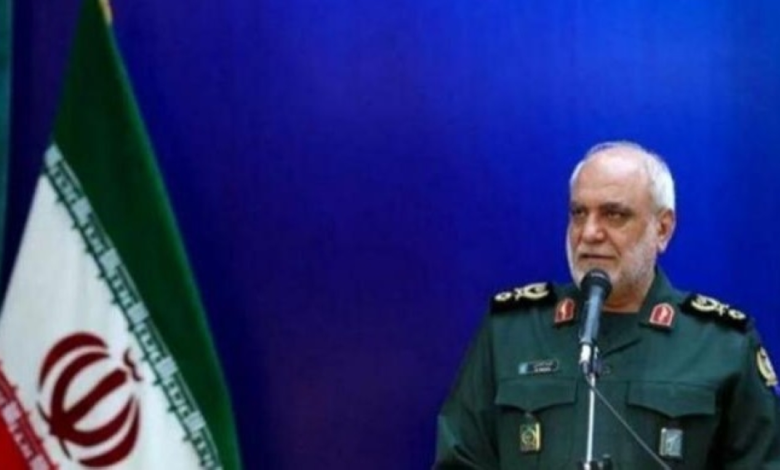
Iran's Revolutionary Guard announced on Monday, in an official statement, the death of its intelligence chief, Majid Khademi, in an Israeli airstrike targeting Tehran. This operation comes amid an unprecedented escalation in the direct conflict between the two sides. The Israeli military confirmed in a separate statement that it carried out the assassination with a precision airstrike "last night," noting that Khademi was one of the most prominent Revolutionary Guard commanders, possessing extensive military and security experience that made him a high-value strategic target.
Historical context and shadow war
The Iranian Revolutionary Guard's intelligence apparatus was established as a parallel entity to the Ministry of Intelligence, and its role has grown significantly to become the dominant security force within Iran, responsible for thwarting threats. The assassination of Khademi represents a new and dangerous chapter in the long-standing "shadow war" between Israel and Iran, which has included, over the years, cyberattacks, assassinations of nuclear scientists, reciprocal attacks on ships, and proxy conflicts across the Middle East.
Taking office amid a turbulent crisis
Majid Khademi assumed this sensitive post following the assassination of his predecessor, Mohammad Kazemi, in June 2015, during the intense 12-day war waged by Israel against the Islamic Republic. Khademi's appointment came at a critical juncture, as Tehran needed to restructure its security and intelligence apparatus to counter repeated Israeli infiltrations that had penetrated deep into the Iranian capital and targeted sensitive sites.
Popular protests and US sanctions
Domestically, Khademi played a pivotal role in orchestrating and managing the security response to the widespread popular protests that erupted in late 2015 and culminated last January. These protests began with demands for improved living conditions before evolving into a movement against the leadership of the Islamic Republic. Iranian authorities responded to these protests with a brutal crackdown that resulted in the deaths of thousands. In an international response, the US Treasury Department imposed stringent sanctions on Khademi, asserting that the Revolutionary Guard's intelligence apparatus played a "decisive role in the violent suppression of the protests" and that it was "a cornerstone of the nationwide campaign of mass violence, arbitrary arrests, and intimidation.".
Top leadership losses and regional repercussions
The assassination of Khademi is part of a broader campaign of US-Israeli strikes that began on February 28, which has resulted in a political and military earthquake in Tehran with the deaths of several top Iranian commanders, most notably Supreme Leader Ayatollah Ali Khamenei. The Revolutionary Guard has also suffered heavy losses, including its commander-in-chief, Mohammad Pakpour, the navy commander, Ali Reza Tangsiri, and the Basij commander, Gholam Reza Soleimani.
This event carries extremely serious regional and international repercussions. Domestically, the loss of so many leaders poses an existential challenge to the power structure. Regionally, this escalation threatens to drag the Middle East into a full-blown regional war that would jeopardize maritime security and global energy supplies, presenting the international community with a difficult test in containing the crisis.