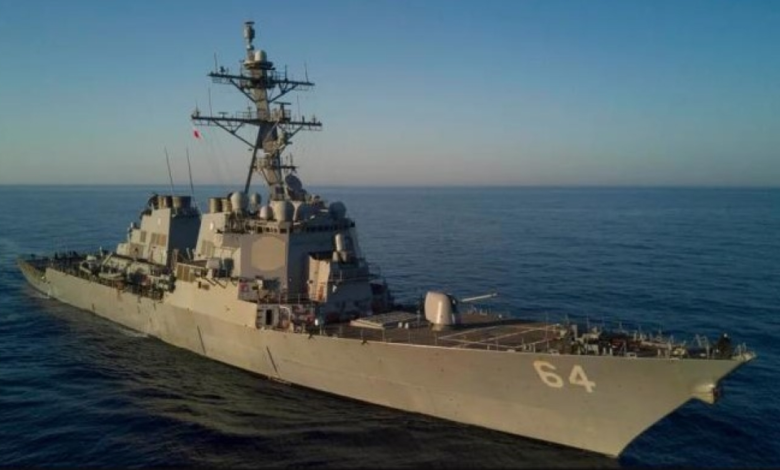
Iran bans military vessels from passing through the Strait of Hormuz but allows commercial vessels

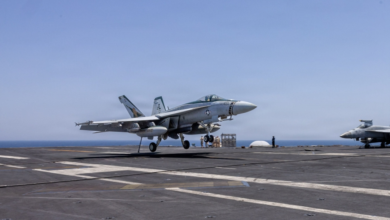
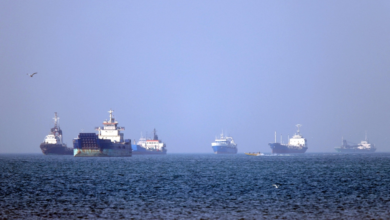
Iranian authorities announced the continuation of the ban on military vessels transiting the strategic Strait of Hormuz, a move reflecting ongoing security tensions in the region. Iranian state television quoted a high-ranking military official confirming that Tehran would prevent warships from using this vital waterway, even as it announced the reopening of the strait to commercial shipping under specific conditions.
Details of the Iranian decision regarding navigation in the Strait of Hormuz
The Iranian military official clarified in televised remarks that the ban applies exclusively to warships and military vessels, emphasizing that the passage of military ships through the Strait of Hormuz remains strictly prohibited. He noted, however, that civilian and commercial vessels are permitted to transit, but must adhere to pre-defined maritime routes and obtain prior authorization from the Iranian Revolutionary Guard Corps Navy to ensure safe navigation.
Trump's statements and the approaching agreement with Tehran
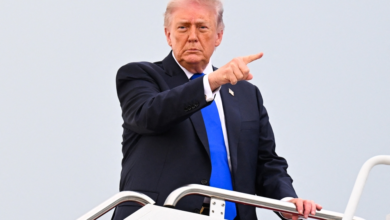
On the other hand, in a significant political development, US President Donald Trump stated that there was tangible progress in the negotiations with Tehran. Trump affirmed that there were no longer any fundamental points of contention or outstanding obstacles preventing a comprehensive agreement with Iran, describing the anticipated agreement as being very close. These statements followed posts on his social media platform, Truth Social, where he praised the progress made on the issues of fully reopening the Strait of Hormuz and definitively ending the Iranian nuclear program.
Historical context and strategic importance of the Strait of Hormuz
To understand the dimensions of this development, one must consider the historical context and geopolitical significance of the Strait of Hormuz. This strait is one of the world's most important and sensitive waterways, connecting the Persian Gulf, the Gulf of Oman, and the Arabian Sea. Historically, the strait has witnessed frequent tensions between the United States and Iran, particularly during periods of escalation related to the nuclear program and economic sanctions. The strait represents a strategic maritime chokepoint, and Tehran has long used it as a tool for political and military leverage against Western powers. For decades, the Islamic Revolutionary Guard Corps Navy has been responsible for securing and monitoring the Iranian side of the strait.
Expected economic and geopolitical impacts
These developments have significant implications at the local, regional, and international levels. Regionally, the security of the Strait of Hormuz directly impacts the interests of the Gulf Arab states, which rely on it to export the majority of their oil production to global markets. Internationally, any threat to or restriction of navigation in the Strait of Hormuz would immediately affect global energy prices, as approximately one-fifth of the world's crude oil consumption passes through it. Furthermore, reaching a US-Iranian agreement that guarantees the stability of navigation and limits nuclear armament would reshape the landscape of security and economic alliances and alleviate the tensions that threaten the stability of the global economy and supply chains.