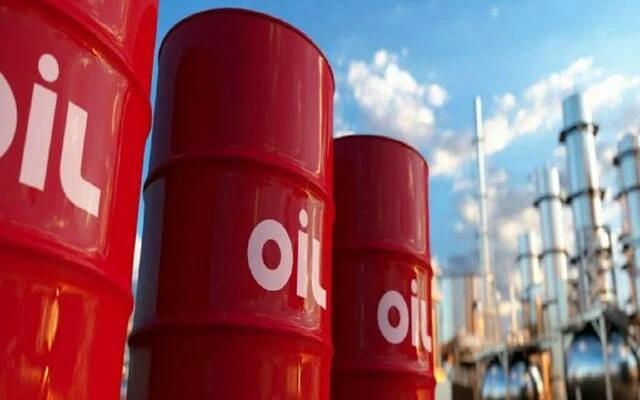

Historic jump in global oil prices
Global oil prices surged today, surpassing $100 a barrel, a rise of nearly 7%. This dramatic market development coincides with preparations by the US Navy to exert greater control over commercial shipping and oil tankers in the strategic Strait of Hormuz. This move is highly sensitive, as it could significantly curtail Iranian oil exports, following the breakdown of negotiations between Washington and Tehran and the failure to reach an agreement to end the current tensions.
Details of market movements and futures contracts
In terms of figures, Brent crude futures, the global benchmark, saw a sharp rise of $7.01, or 7.36%, reaching $102.21 per barrel, thus recovering from previous losses after closing slightly lower by 0.75% in trading last Friday. Similarly, US crude followed suit, with West Texas Intermediate (WTI) crude reaching $104.87 per barrel, marking an increase of $8.30, or 8.59%, after a decline of 1.33% in the previous session.
The strategic importance of the Strait of Hormuz
To understand the implications of this surge, one must consider the historical and geographical context of the Strait of Hormuz. This strait is the world's most important waterway for oil trade, with approximately one-fifth of the world's crude oil consumption passing through it daily. Any threat or suggestion of closing this vital artery immediately triggers panic in global markets. Historically, Iran has consistently used the Strait of Hormuz as leverage to exert pressure on the international community, while the United States and its allies strive to ensure freedom of navigation through it to avert devastating energy crises that could cripple the global economy.
Expert analysis and prevailing conditions
Commenting on these developments, Saul Kavonic, head of energy research at a leading global energy group, explained that the current landscape reflects a fundamental shift. He said, “The market has now largely returned to pre-ceasefire conditions, with one key difference: the United States will now move to block the remaining Iranian oil flows, which amount to approximately two million barrels per day, from transiting the Strait of Hormuz as well.” This statement underscores the scale of the supply the market could suddenly lose.
Expected economic impacts
This surge in oil prices is expected to have far-reaching consequences. Internationally, oil prices remaining above $100 a barrel poses a significant challenge for central banks worldwide, which are already struggling to contain inflation. Higher energy costs will inevitably translate into increased production and transportation costs, potentially slowing economic growth in major industrialized oil-importing nations. Regionally, while Middle Eastern oil-exporting countries may benefit from increased revenues in the short term, persistent geopolitical tensions could pose long-term security and economic challenges, making market stability a pressing global imperative.