Sighting of the crescent moon of Dhu al-Qi'dah 2026: Ideal conditions for naked-eye observation

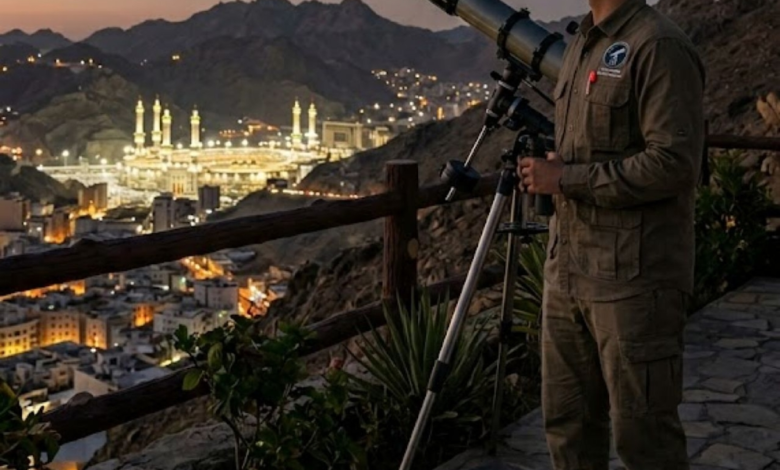
Astronomy enthusiasts and citizens in Saudi Arabia and the Arab world will be looking towards the western horizon this evening, Saturday, April 18, 2026, to observe a special astronomical event: the sighting of the crescent moon of Dhu al-Qi'dah. Engineer Majid Abu Zahra, head of the Jeddah Astronomical Society, explained that the weather and astronomical conditions are perfectly suited to allow those interested to clearly see the crescent, either with the naked eye or using optical instruments, immediately after sunset.
Details of the astronomical calculations for the birth of the crescent moon
According to precise astronomical calculations issued by the Society, the central conjunction (new moon phase) occurred on Friday, April 17, 2026, at 2:51 PM Mecca time. This means that the moon has passed the new moon phase and has begun to move away from the sun. At sunset on Saturday, the crescent moon will be between 27 and 30 hours old in most observation areas. Abu Zahra explained that the angular elongation of the crescent moon from the sun will range between approximately 12 and 18 degrees, while it will be about 8 to 15 degrees above the western horizon. Since the illuminated portion of the moon's disk will not exceed 1.5% to 3%, it will appear as a thin, delicate streak with two upward-pointing horns, requiring close observation.
Best times and locations for monitoring
To ensure a successful observation, it is advisable to avoid light pollution in cities and choose open locations with a western horizon unobstructed by tall buildings or mountains. The best time for observation begins immediately after sunset, and visibility gradually improves after 10 to 20 minutes. The crescent moon will remain visible in the sky for approximately 30 to 45 minutes before setting, depending on the observer's geographical location. Visibility increases as one moves westward towards North African countries, due to the crescent's age and longer visibility.
The historical and religious context of the month of Dhu al-Qi'dah
This astronomical event holds immense religious and historical significance. Dhu al-Qi'dah is the eleventh month of the Islamic calendar and one of the four sacred months, which God Almighty has sanctified in the Holy Quran, and during which fighting is forbidden. Historically, this month was named "Dhu al-Qi'dah" because the pre-Islamic Arabs would refrain from travel and raiding during this month in preparation for the Hajj pilgrimage the following month. The sighting of the crescent moon of Dhu al-Qi'dah serves as an early announcement and a preliminary step before the start of the major Hajj season, when caravans of pilgrims, both in ancient and modern times, begin preparing to travel to the Holy Land.
The importance of sighting the new moon locally and regionally
At both the local and regional levels, the sighting of the new moon plays a pivotal role in the lives of Muslims, as the Islamic calendar is entirely based on the lunar cycle. Despite the tremendous advancements in astronomy and the precise calculations that determine the dates of new moons for years to come, the practice of sighting the new moon with the naked eye or binoculars remains a Sunnah (Prophetic tradition) followed in Saudi Arabia and most Muslim countries. This harmony between modern science and religious tradition underscores the importance of astronomical observatories and specialized societies like the Jeddah Astronomical Society in guiding the community and providing reliable data to official authorities.
A magnificent celestial scene
In conclusion, the importance of observing the crescent moon of Dhu al-Qi'dah extends beyond religious and calendar significance. Its appearance in the sky is a magnificent celestial spectacle, inviting contemplation of the precise movements of celestial bodies. The clarity of the atmosphere, free from dust and humidity, will be the decisive factors tonight in creating a natural masterpiece that underscores humanity's profound connection to the universe and its continuous cycles, as we eagerly await the astronomical events and phenomena that the new month holds.