The Haramain train increases its capacity to serve 2.2 million pilgrims in the 1445 AH season

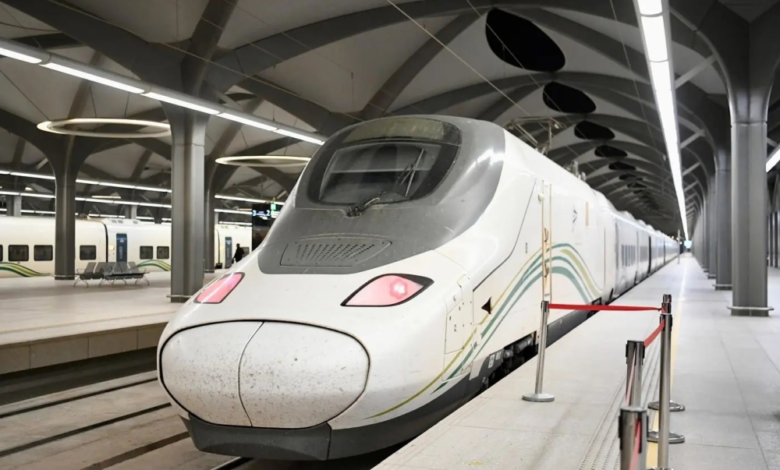
Saudi Railways (SAR) has announced its operational plan for the 1445 AH Hajj season, which includes increasing the capacity of the Haramain High-Speed Railway to over 2.21 million seats. This step comes as part of the Kingdom of Saudi Arabia's ongoing efforts to serve pilgrims and provide a safe, comfortable, and reliable transportation experience between Makkah and Madinah, passing through Jeddah and King Abdullah Economic City.
Historical background and project context
The Haramain High-Speed Railway is one of the largest public transportation projects in the Middle East and a key component of Saudi Arabia's Vision 2030, which aims to develop infrastructure and serve pilgrims performing Hajj and Umrah. Officially launched in 2018, the project connects the two holy cities of Mecca and Medina via a 453-kilometer electrified track, operating at speeds of up to 300 kilometers per hour. Since its inception, the railway has revolutionized transportation between the two holy cities, reducing travel time to approximately two hours and offering a modern and environmentally friendly alternative to traditional modes of transport.
Details of the operational plan for the Hajj season
This year's operational plan includes an increase of over 210,000 seats compared to last year's Hajj season, with more than 5,308 trips operating, representing an 11% increase in the number of available trips. During peak times, the number of daily trips will reach 142, ensuring a smooth flow of pilgrims and minimizing waiting times. The Haramain High-Speed Railway fleet comprises 35 modern trains, each with a capacity of 417 seats, distributed across Business and Economy classes, and equipped with the latest amenities and services to guarantee a distinguished travel experience for pilgrims.
Strategic importance and expected impact
This increase in capacity is of paramount importance on several levels. Domestically, it reflects the Kingdom's readiness and ability to efficiently manage millions of pilgrims and supports the objectives of the National Transport and Logistics Strategy. Internationally, it reinforces Saudi Arabia's position as a leading religious destination and presents the world with a sophisticated model for managing Hajj and Umrah seasons. This expansion is expected to alleviate pressure on the road network, reduce carbon emissions, and enhance traffic safety, positively impacting the pilgrim's spiritual experience from arrival to departure.