Trump announces a naval blockade of the Strait of Hormuz and the interception of ships

Unprecedented US announcement regarding the Strait of Hormuz
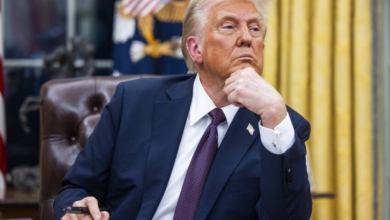
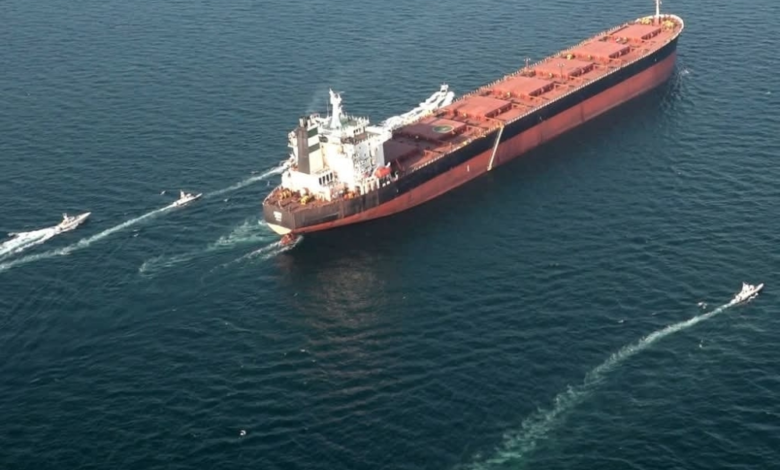
US President Donald Trump announced that the United States would take decisive escalatory steps by imposing a complete naval blockade on the strategic Strait of Hormuz. In his remarks, Trump explained that the US Navy would immediately begin implementing this blockade, which includes preventing all vessels, commercial or otherwise, from attempting to enter or leave the strait. These statements mark a major turning point in Washington's policy regarding maritime security in the Middle East region.
Destruction of mines and interception of ships in international waters
In a related development, Trump confirmed that US forces would begin intensive military operations aimed at destroying and removing all sea mines in the Strait of Hormuz to ensure they could not be used to threaten international navigation. The presidential orders went further, including strict directives to the US Navy to track and search for any vessel in international waters found to be paying fees to Iranian authorities and to intercept it immediately. This aims to tighten the economic noose around Tehran and prevent it from profiting from maritime traffic.
General context and historical background of the event
The Strait of Hormuz is one of the world's most strategically important waterways, connecting the Persian Gulf, the Gulf of Oman, and the Arabian Sea. Historically, this strait has been the site of ongoing tensions between the United States and Iran, particularly during periods of political and military escalation. A significant portion of the world's energy supply depends on this waterway, with approximately one-fifth of the world's daily oil consumption passing through it. Iran has consistently used the threat of closing the strait as a political bargaining chip in the face of Western sanctions, prompting the United States and its allies to bolster their military presence in the region. The U.S. Fifth Fleet, headquartered in Bahrain, is responsible for securing these vital waterways and conducting continuous patrols to deter any potential threats.
The importance of the event and its expected regional and international impact
Regionally, this decision is expected to raise the alert level to its highest point among countries in the region, requiring high-level security coordination to avoid any direct military clashes that could ignite a wider conflict affecting the stability of the Middle East. Internationally, imposing a naval blockade and intercepting ships will have profound economic repercussions, most notably a potential and rapid rise in global oil prices due to fears of supply chain disruptions. Furthermore, global financial markets and marine insurance companies will be directly affected, as insurance costs for commercial shipments passing through the region will rise to unprecedented levels, ultimately impacting commodity prices. This escalation represents a firm American message aimed at curbing Iranian influence and reducing its financial revenues, presenting the international community with scenarios that require close monitoring of developments.