The Kaaba's covering was raised in preparation for the Hajj season of 1447 AH

Exceptional preparations to welcome the pilgrims
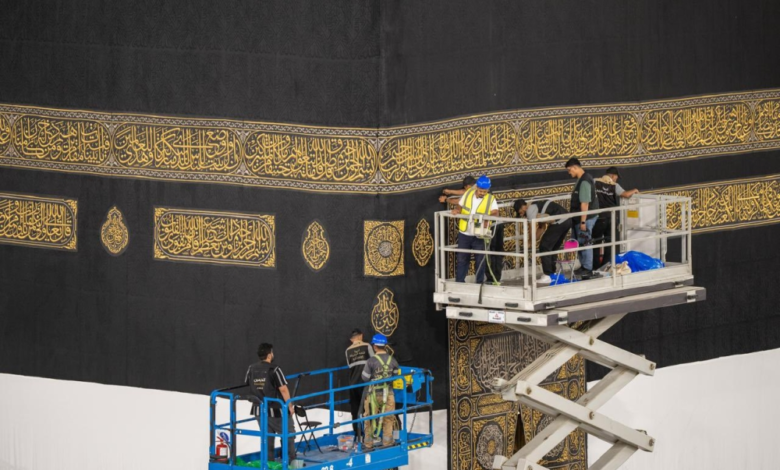
In a solemn and awe-inspiring annual event, the General Presidency for the Affairs of the Two Holy Mosques completed the raising of the lower part of the Kaaba's covering by three meters on Friday. This extraordinary step is part of the extensive preparations underway to welcome pilgrims to the Holy Mosque for the Hajj season. This act officially marks the beginning of the countdown to the performance of the fifth pillar of Islam, as Muslims from around the world turn their attention to the holy sites.
Details of the process of raising the Kaaba's covering
The meticulous operation involved dismantling the lower sections of the Kaaba's covering and separating the corners, then raising and securing it at a height of three meters. In addition, the white cotton fabric was secured and the lamps were returned to their designated positions, following organized and precise procedures that respect the sanctity of the place. The General Presidency for the Affairs of the Two Holy Mosques explained that the lifting process took approximately two hours of continuous work and was carried out by 34 skilled and qualified Saudi craftsmen who worked harmoniously and with great precision to complete the task according to the highest internationally recognized standards.
The historical context of the tradition of rolling up the Kiswa
Historically, this practice is known as "raising the Kaaba's covering," a long-standing Islamic tradition. In the past, the primary purpose of raising the covering was to protect it from certain improper practices by some pilgrims, such as attempting to cut pieces of the fabric to keep for blessings. With the passage of time and the dramatic increase in the number of pilgrims, this practice became essential to protect the covering, made of pure silk and embroidered with gold and silver threads, from damage or tearing due to direct friction and the immense crowds during the circumambulation (Tawaf).
Protecting the Kaaba covering and caring for the Two Holy Mosques
The General Presidency for the Affairs of the Two Holy Mosques confirmed that this procedure is part of the annual routine maintenance aimed at preserving the integrity of the Kaaba's covering and protecting it from contact or damage, especially given the high volume of circumambulation and close proximity to the Kaaba during the Hajj season. The raised portion is covered with a two-meter-wide white cotton cloth on all four sides, a step followed annually that reflects the level of organization and precision in the comprehensive preparations undertaken by the Kingdom of Saudi Arabia to receive the pilgrims and facilitate their performance of the Hajj rituals with ease and tranquility.
Regional and international importance and influence
This step carries immense importance and a profound impact on various levels. Domestically, these efforts highlight the exceptional care that the wise leadership of the Kingdom of Saudi Arabia bestows upon the Two Holy Mosques and their visitors, harnessing all available technical and human resources to serve the pilgrims. Regionally and internationally, the sight of the Holy Kaaba adorned with its raised, white covering sends a message of reassurance and readiness to millions of Muslims worldwide, affirming the readiness of the holy sites to accommodate the multitudes of pilgrims in a safe and spiritual environment. This reinforces the Kingdom's position as a hub for the Islamic world and a leader in managing millions of pilgrims with efficiency and competence.