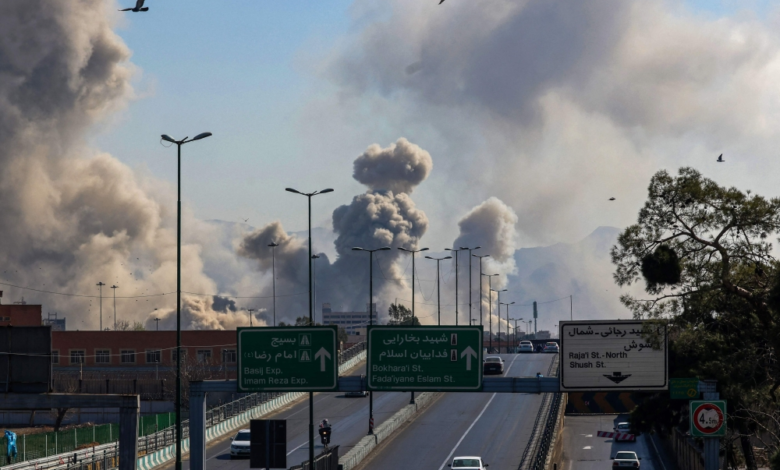

On Tuesday, the Iranian capital witnessed a series of rapid developments, including a sounding of explosions in Tehran, specifically in the central and northern parts of the city. These events come amidst unprecedented tensions gripping the Middle East, raising the specter of a new phase of direct military escalation.
Details of the incident and the activation of Iranian air defenses
According to field reports relayed by Agence France-Presse (AFP), journalists in the Iranian capital confirmed hearing loud explosions that shook central Tehran. This coincided with a significant activation of Iranian air defense systems, particularly in the northern airspace of the capital, which often houses vital installations and sensitive sites. This development has triggered a state of heightened alert and vigilance, as these explosions reflect a de facto spillover of tensions into the heart of Iran, posing a major security challenge for local authorities.
The regional context and the continuation of strikes for the fifth week
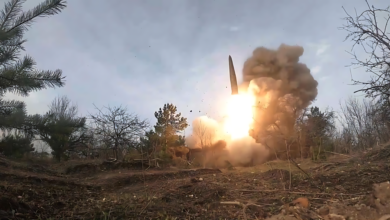
These developments are of major strategic importance as they come amid continued US and Israeli strikes for the fifth consecutive week, according to news sources. This ongoing escalation indicates a fundamental shift in the rules of engagement that have prevailed in the region for years. After a long period of “shadow warfare” that relied primarily on cyberattacks, intelligence operations, and indirect targeting through proxies, the conflict appears to have taken a more direct and dangerous turn, placing the entire region on the brink of a full-blown regional conflict with unpredictable consequences.
Historical background of direct tensions
Historically, Tehran has rarely been directly targeted or subjected to overt aerial incursions since the end of the Iran-Iraq War in the late 1980s. For decades, confrontations between Iran on one side, and Israel and the United States on the other, have been concentrated in external arenas such as Syria, Lebanon, and Iraq, or through covert and limited attacks on nuclear facilities. Therefore, the activation of air defenses and the sound of explosions in the heart of Tehran represent a dangerous strategic shift that crosses the traditional red lines that have governed the conflict for decades.
Expected international and economic repercussions
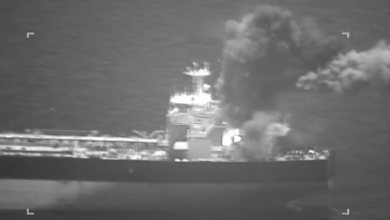
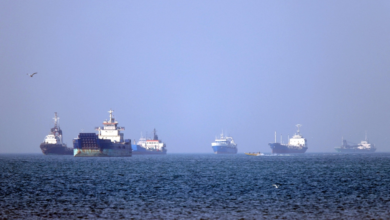
Internationally, these developments are causing grave concern for both the international community and global markets. Any direct military escalation targeting Iranian territory threatens dire consequences for maritime security in the Arabian Gulf and the Strait of Hormuz, through which a significant portion of the world's oil supply passes. This geopolitical anxiety is typically reflected immediately in global energy prices, adding further burdens to a global economy already grappling with multiple crises and challenges. In light of these circumstances, diplomatic calls for restraint and the avoidance of a slide into open warfare are mounting from various world capitals, warning that such a war could have uncontrollable consequences and its repercussions unmitigated.
In conclusion, the coming hours and days remain crucial in determining the course of these regional tensions, and whether these explosions represent mutual warning messages within a calculated limit, or whether they are the spark that ignites a new phase of direct and open military confrontation in the Middle East.