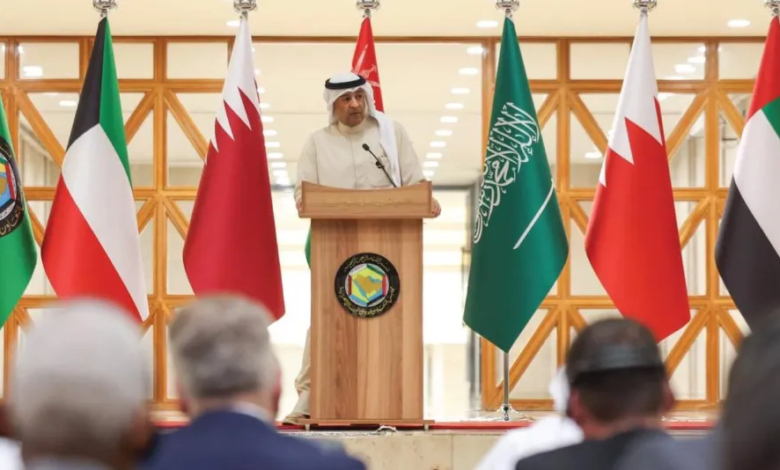
Al-Badawi: Any regional arrangements that do not involve the Gulf states are unacceptable

A firm stance from the Gulf Cooperation Council
His Excellency the Secretary-General of the Gulf Cooperation Council (GCC), Mr. Jassem Mohammed Al-Budaiwi, categorically affirmed that any regional arrangements concerning the security and stability of the Middle East that exclude the participation of the Gulf states are completely unacceptable. This important statement comes amidst the rapid geopolitical shifts in the region and ongoing international discussions regarding the formulation of a new regional security system that guarantees stability and lasting peace, thus necessitating the Gulf's central role in these arrangements.
General context and historical background
Historically, the Middle East has suffered from successive crises and foreign interventions that have directly impacted its national security. In previous instances, such as the negotiations that led to the Iranian nuclear agreement (the Joint Comprehensive Plan of Action) in 2015, the Gulf Cooperation Council (GCC) states were excluded from the negotiating table. This resulted in a clear failure to address regional security concerns, particularly regarding Iran's ballistic missile program and interference in the internal affairs of Arab states. Since then, the Gulf states have adopted a unified and firm stance, insisting on their inclusion as key players in any future security negotiations or arrangements, based on the principle that the region's security is indivisible.
The importance of the event and the pivotal role of the Gulf states
Al-Badawi's statements are of paramount importance at this time, as the Gulf Cooperation Council (GCC) states are a cornerstone of the global economy and energy security. Their strategic geographic location and their control of vital global waterways such as the Strait of Hormuz, the Arabian Sea, and the Red Sea make their participation in any regional arrangements an imperative, not an option. Furthermore, the Gulf states have demonstrated a remarkable capacity for effective mediation in numerous regional and international issues, thus enhancing their credibility as reliable partners in establishing peace and security.
Expected impact at the local, regional, and international levels
At the local and regional levels, this stance sends a reassuring message to the peoples of the region that their leaders are committed to protecting national achievements and defending their sovereignty against any marginalization. It also underscores the unity of the Gulf Cooperation Council and the integration of its strategic visions in confronting challenges. At the international level, Al-Badawi's message places the international community and major powers before their responsibilities; ignoring the Gulf perspective in any future settlements will inevitably lead to fragile and unsustainable solutions. The involvement of the Gulf states ensures the provision of the necessary political and economic support for the success of any peace initiatives and contributes to building a balanced regional security architecture that respects the sovereignty of states and prevents foreign interference.
Summary of the Gulf position
In conclusion, the statements of the Secretary-General of the Gulf Cooperation Council embody a clear strategic vision: that genuine regional stability cannot be achieved without effective forces on the ground. The Gulf states, with their political, economic, and diplomatic weight, represent the cornerstone of any security equation, and any attempt to disregard this reality will not serve peace efforts but may further complicate the regional landscape and exacerbate its crises.