Trump reveals details of the rescue of pilots in Iran and the assassination of an Iranian official

Amidst the rapidly evolving global political and military landscape, US President Donald Trump made controversial statements regarding a complex US military operation on Iranian soil. These statements coincide with an unprecedented escalation of regional tensions in the Middle East, particularly following the Iranian Revolutionary Guard's announcement of the death of one of its top intelligence officials in an Israeli airstrike, raising numerous questions about the future of stability in the region.
Details of the rescue operation of the American pilots in Iran
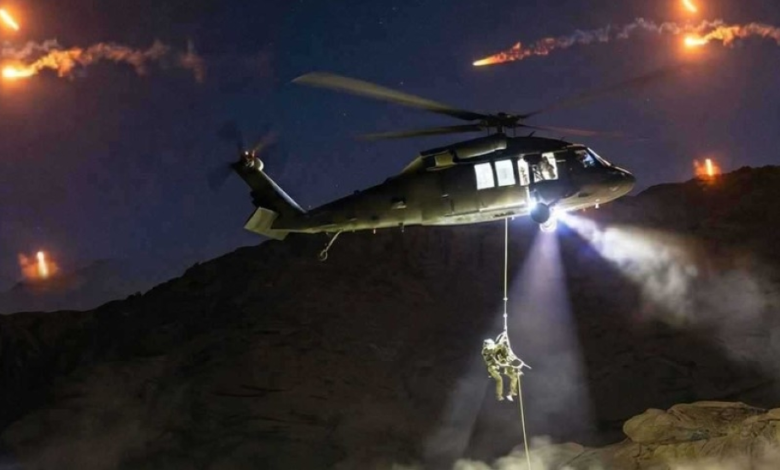
During a press conference at the White House, Donald Trump revealed dramatic details of a massive military operation to rescue two American pilots whose plane was shot down in Iran days earlier. Trump explained that the operation involved more than 170 US military aircraft, divided into precise phases. He noted that 21 aircraft participated in the initial extraction of the crew member, while another 155 aircraft were allocated for the second rescue mission. Trump added a striking detail, confirming that two military transport planes became stuck in the Iranian sand during the operation, forcing US rescue teams to destroy them to prevent them from falling into Iranian hands or sensitive military equipment.
Historical context: American military memory in Iran
Trump's remarks about the helicopters stuck in the sand and the forces having to destroy them are reminiscent of one of the most famous US military operations in recent history: Operation Eagle Claw, which took place in April 1980. At that time, then-President Jimmy Carter ordered a covert mission to rescue 52 American hostages held inside the US Embassy in Tehran. The operation faced severe challenges due to sandstorms in the Iranian desert, which grounded several helicopters and caused a military transport plane to collide with another helicopter, resulting in the deaths of eight US servicemen and the destruction of the aircraft. This historical context highlights the complexity and danger of conducting any rescue or military intervention operations within the challenging terrain of Iran and explains the strategic caution that accompanies such missions.
Assassination of an Iranian Revolutionary Guard intelligence official
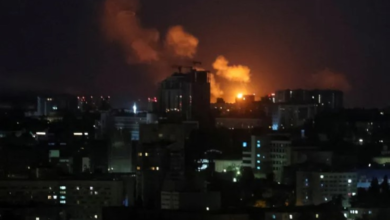
In a separate development related to tensions with Tehran, the Iranian Revolutionary Guard Corps (IRGC) announced on Monday the death of its intelligence chief, Majid Khademi, following an assassination. In a significant development, the Israeli military confirmed in an official statement its responsibility for the assassination, carried out through a precise airstrike the previous night. The Israeli statement described Khademi as one of the most prominent IRGC commanders with extensive military and security experience. It is worth noting that this Iranian official was on the US sanctions list imposed earlier this year, due to accusations of his involvement in suppressing internal protests in Iran and violating human rights.
Expected impact and regional and international repercussions
These two developments—the show of American military force and the Israeli assassination—carry profound implications and far-reaching consequences. At the local and regional levels, the assassination has heightened the state of security and military alert in the Middle East. Iran may find itself compelled to retaliate to save face and restore deterrence, raising the possibility of direct or proxy confrontations in various arenas. At the international level, these events are causing concern throughout the international community, as any large-scale military escalation in this vital region will inevitably lead to disruptions in global energy markets and threaten international shipping lanes. Furthermore, the United States' reaffirmation of its formidable military capabilities sends a clear message that military options remain firmly on the table to ensure the security of its allies and its strategic interests.