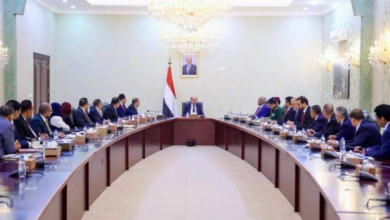

The Gulf Cooperation Council (GCC) reiterated its firm and supportive stance towards the United Arab Emirates regarding its three occupied islands, Greater Tunb, Lesser Tunb and Abu Musa, expressing its categorical rejection of the false Iranian claims and practices aimed at imposing a fait accompli policy on these islands.
Historical background of the conflict
The dispute over the three islands dates back to 1971. With the end of British protection over the Trucial States, and just two days before the declaration of the United Arab Emirates, Iranian forces militarily occupied the islands. Since then, the UAE has asserted its historical and sovereign right to these islands, relying on historical documents and maps that prove their affiliation with the emirates of Ras Al Khaimah and Sharjah. Over the past decades, the UAE has consistently called for a peaceful resolution to the issue, either through direct negotiations or by resorting to the International Court of Justice. Tehran has consistently rejected this approach, maintaining that its sovereignty over the islands is non-negotiable.
The importance of a unified Gulf stance
The Gulf Cooperation Council's (GCC) continued affirmation of its support for the UAE serves as a clear message of solidarity and unity of purpose regarding issues affecting the sovereignty of any of its members. This stance is a cornerstone of the GCC's foreign policy, as the security and stability of the UAE are viewed as integral to the security and stability of the entire region. This support extends beyond mere political statements to include regional and international forums, where the GCC states work in a coordinated manner to raise the issue and emphasize the necessity of resolving it in accordance with the principles of international law and the UN Charter.
Regional and international impact of the issue
The three islands occupy a strategically vital location near the Strait of Hormuz, one of the world's most important waterways through which a significant portion of global oil supplies pass. This geographical location makes the islands' dispute an issue of international dimensions, as any escalation in the region could threaten the stability of international navigation and global energy markets. Therefore, the international community, represented by the League of Arab States and the United Nations, is closely monitoring the situation, repeatedly calling on both sides to exercise restraint and seek diplomatic solutions that guarantee security and stability in the Arabian Gulf region, a vital artery for the global economy.