Wall Street declined amid Middle East tensions and the Strait of Hormuz crisis

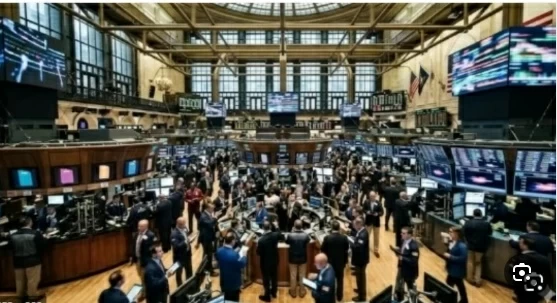
Major stock indices on Wall Street saw a significant decline at the opening of the trading session, as investors were overcome by anxiety over escalating geopolitical tensions in the Middle East, overshadowing the positive atmosphere created by strong corporate earnings reports last week.
In terms of performance, the Dow Jones Industrial Average fell 82.6 points, or 0.17%, to close at 49,416.66. The broader S&P 500 index edged down 1.7 points, or 0.02%, to 7,228.38. Similarly, the tech-heavy Nasdaq Composite slipped 2.3 points, or 0.01%, to 25,112.18.
General context: The Strait of Hormuz crisis and its impact
This market decline came in the wake of statements by the then-US administration under President Donald Trump, which announced the start of an operation aimed at securing navigation in the Strait of Hormuz, a vital waterway through which a large portion of the world's oil supply passes. The US Treasury Secretary at the time confirmed that the United States aimed to open the strait and ensure its complete control over it to guarantee the uninterrupted flow of oil supplies.
The US official added, “Oil markets will be very well supplied, and now is the time for international partners to intensify pressure on Iran.” He noted that the US administration is aware of the impact of gasoline prices on American citizens, but predicted that prices would fall quickly as the situation stabilizes. He also called on China to join US efforts in this regard, emphasizing that Washington continues to exert crippling economic and financial pressure on Tehran to compel it to change its behavior.
Strategic importance and economic impact
The Middle East, and specifically the Strait of Hormuz, is a vital artery for the global economy. Any threat to close this strait or disrupt maritime traffic directly leads to uncertainty in global energy markets, driving up crude oil prices. This rise in energy prices negatively impacts the global economy by increasing production and transportation costs for companies and reducing consumer purchasing power, which in turn raises concerns about slowing economic growth and prompts investors to sell off high-risk assets like stocks and seek safe havens such as gold and government bonds.
Wall Street’s immediate reaction highlights how sensitive global financial markets are to geopolitical risks. Investors are closely monitoring any developments that could disrupt global supply chains or increase the likelihood of regional conflicts, as such events can drastically alter market trajectories within hours.