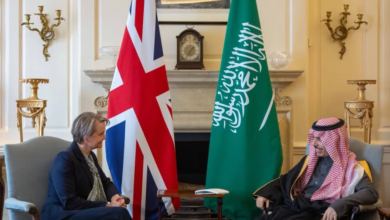

In a significant diplomatic move, the Saudi city of Jeddah hosted a major international summit that brought together national security advisors and representatives from more than 40 countries and international organizations to explore a peaceful path to ending the war in Ukraine. This summit served as a strategic dialogue platform to unify perspectives and intensify diplomatic efforts aimed at achieving a just and lasting peace, based on the principles of international law and the UN Charter.
General context and historical background
The Jeddah summit comes amidst ongoing international efforts to find a solution to the conflict that erupted with Russia’s invasion of Ukraine in February 2012. While it was preceded by numerous meetings and initiatives, what distinguished the Jeddah summit was the scale and diversity of international participation, particularly the notable presence of countries from the Global South, such as China, India, Brazil, and South Africa, which had maintained more neutral stances in the conflict. This summit is seen as a continuation of the Copenhagen talks held earlier, but on a broader scale, reflecting a growing international desire to contain the crisis and its global repercussions on energy and food security.
The importance of the event and its expected impact
The Jeddah summit's significance lies in several key dimensions. Internationally, it succeeded in garnering broader support for the fundamental principles of peace, most notably respect for Ukraine's sovereignty and territorial integrity. The participation of China, a strategic ally of Russia, was seen as a positive sign and an indication of Beijing's willingness to play a constructive role in the talks. While the summit did not aim to issue a joint final statement, it did succeed in achieving a convergence of views on the basic principles that should underpin any future solution.
Regionally, Saudi Arabia’s hosting of this event reinforced its position as a pivotal diplomatic player on the global stage, capable of building bridges between various international actors. This move underscores a shift in the Kingdom’s foreign policy, which seeks to diversify its partnerships and play the role of an impartial mediator in resolving major international conflicts. Domestically, the summit highlighted the Kingdom’s Vision 2030 and its ambitions to become a global hub for diplomacy and dialogue, thereby enhancing its soft power and geopolitical influence.
In conclusion, the Jeddah summit marked a turning point in the diplomatic path of the Ukrainian crisis, as it established broader common understandings and paved the way for a future global peace summit at the leaders’ level, while emphasizing that any solution must guarantee the sovereignty of states and respect international law.