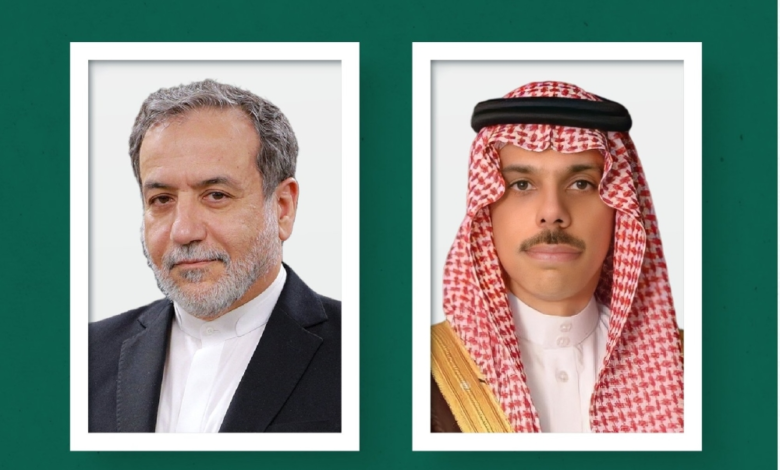
The Foreign Minister discusses peace negotiations with his Iranian counterpart

Details of the telephone call between the two foreign ministers
received Prince Faisal bin Farhan bin Abdullahan important telephone call from his Iranian counterpart, His Excellency Abbas Araqchi,. The call focused on discussing the latest regional developments, particularly in the wake of the peace negotiations and talks between the Islamic Republic of Iran and the United States of America. The two sides exchanged views on the course of these negotiations and their direct repercussions on the security and stability of the region.
Historical context and development of Saudi-Iranian relations
These telephone conversations come within the framework of the ongoing positive development in Saudi-Iranian relations, culminating in the historic agreement signed under Chinese auspices in March 2013. This agreement, which led to the resumption of diplomatic relations between Riyadh and Tehran, laid the foundation for a new phase of cooperation and joint coordination on regional and international issues. Since then, both countries have been keen to keep communication channels open for continuous consultation, reflecting a genuine desire to turn the page on past differences and work towards achieving sustainable security and stability in the Middle East region.
The importance of peace negotiations and their regional impact
Discussing the latest developments in the peace negotiations between Tehran and Washington is of paramount importance, given the direct impact of these negotiations on the political and security landscape of the region. The indirect talks between Iran and the United States, which often address sensitive issues such as regional de-escalation and the lifting of sanctions, necessitate ongoing coordination and informing of neighboring countries, particularly Saudi Arabia. Saudi Arabia's pivotal role in the region makes it essential to involve Riyadh in the overall picture of any international agreements that could redraw the geopolitical map of the Middle East.
International repercussions and the stability of energy markets
At the regional and international levels, this Saudi-Iranian coordination contributes to strengthening mutual trust and easing tensions that have long affected the stability of the Gulf Cooperation Council (GCC) states. The success of any peace efforts or de-escalation between Iran and Western powers will positively impact maritime security in strategic waterways, ensuring the continued smooth flow of global energy supplies. World capitals are watching these diplomatic moves with great interest, as the Kingdom, under its wise leadership and with its ambitious Vision 2030, prioritizes regional stability as a cornerstone of its economic development.
The future vision for security in the Middle East
In conclusion, this analytical reading of the situation suggests that the continued direct communication between the Saudi and Iranian foreign ministers represents a strategic step towards building a sustainable regional security architecture. The transparent exchange of views on peace negotiations not only strengthens bilateral understanding but also sends reassuring messages to the international community that the countries of the region are capable of managing their own affairs and coordinating their positions in a way that serves the best interests of their people and lays the foundation for a future of peace and prosperity, free from the specter of regional conflicts and crises.